Politics and war, science and sports, memoir and biography — there's a great big world of nonfiction books out there just waiting to be read. We picked the 100 best and most influential written in English since 1923, the beginning of TIME ... magazine
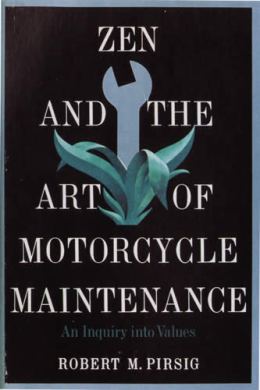
Motorcycle road trips have been a common vehicle for stories about the pursuit of freedom and wisdom. 1974′s Zen and the Art of Motorcycle Maintenance follows suit. Based on actual events in Robert Pirsig’s life (though he takes more than a few creative liberties), the book propels the narrator, Pirsig’s alter-ego Phaedrus, and the narrator’s son through a trip from Minnesota to California, expounding on some of philosophy’s time-old questions, with his motorcycle serving as metaphor for discussions on form and function, the romantic view and the classical view. The book mainly centers on the search for quality — what it is and how to define it. But far from reading like a dry philosophy textbook, Pirsig’s work weaves these thoughts into a compelling adventure. The book has sold 5 million copies and inspired several “Pirsig Pilgrims,” devotees that retrace the author’s route in search of similar stimulation.
Contrary to popular opinion — and maybe his own as well — Tom Wolfe did not invent New Journalism. There were Gay Talese and Jimmy Breslin and, before them, any number of American writers who shoved nonfiction into the realm of literature. But it was Wolfe — the Southern dandy in the cream-colored suits — who truly turbocharged journalism with 1968′s The Electric Kool-Aid Acid Test. Wolfe followed author Ken Kesey and his Merry Pranksters through their LSD-soaked bus trips back and forth across America at the very high point of the Sixties.
The characters stand out: the veteran Beat Neal Cassady, at the wheel for one last road trip; Mountain Girl, the gentle-souled Amazonian; and Kesey himself, at the center of it all and yet strangely unknowable. But the real star, of course, is Wolfe’s kandy-colored prose, as pulsing with life as any novelist’s. “Somebody has to be the pioneer and leave the marks for others to follow,” writes Wolfe, referring to Kesey and his band. But Wolfe could have been describing himself and the legion of nonfiction writers, so rarely his equal, who would follow in his wake.
TIME meets the female Banksy bringing royalty to London’s streets
Melissa
Reblogged this on Swamp of Boredom and commented:
I’m reblogging this for my own reference and also to share with my readers (all 34 of you;)). Since the release of the 1001 Books App on Tuesday, I’ve been book list crazy. Since I like non-fiction – especially non-fiction centered on historical events and people, not so much current people – and have read a couple of excellent non-fiction books in the last year (Only Yesterday, Empire of the Summer Moon) I wondered if there was a list of recommended non-fiction books. Of course there is. I found one from the Guardain (UK) that is, obviously, geared towards British readers and that, unlike Time’s list, encompasses all non-fiction ever written. This list from Time consists of books only since Time began publishing, 1923. There are a few that don’t interest me at all and the biography choices focus too heavily on women and African Americans, IMO, but overall the list is excellent.
Enjoy!
As we prepare for the Game of Thrones finale, we recognize Joffrey and nine other baddies who showed us that terrible, horrible things can come in small packages