Politics and war, science and sports, memoir and biography — there's a great big world of nonfiction books out there just waiting to be read. We picked the 100 best and most influential written in English since 1923, the beginning of TIME ... magazine
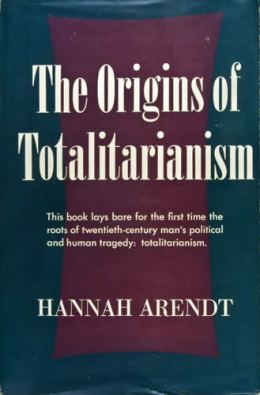
After Nazism, Stalinism and the horrors of World War II, it was right to ask, How did we get here? How could we have let someone like Adolf Hitler come to power? How did anti-Semitism become so widespread? Hannah Arendt, one of the 20th century’s foremost political theorists, found the seeds of anti-Semitism, imperialism and totalitarianism in late 19th century Europe, when the nation-state was on the decline. She traces the two most important political movements of the 20th century — Nazism and Stalinism — along the enormously complex path that culminated in the rise of Germany’s Hitler and the Soviet Union’s Joseph Stalin, men of the same political coin. They were able to transform classes into masses and were bent on world domination by means of fear and propaganda. Arendt’s masterwork was the first to try to make the incomprehensible comprehensible.
In the age of the Tea Party and Birtherism, it’s easy to see historian Richard Hofstadter’s slim treatise on American fringe groups, first delivered as an Oxford lecture in 1963 and published, with other essays, in 1965, as prophetic. Note the familiar descriptions of the modern conspiracy theorist’s signature plumage: his “careful, conscientious and seemingly coherent application to detail;” his belief in the omniscient, implacable evil of the conspiracy and the urgency of his own mission. (Sound familiar, Glenn Beck?) Hofstadter traced strains of the paranoid style from the anti-Masonic panic of the 18th century to the McCarthyite witch hunts of the 1950s, and emphasized that paranoia can breed anywhere on the political spectrum. It was disenfranchisement, he believed, that created the most fertile ground for conspiracy theories. Yet The Paranoid Stylebecame a touchstone of midcentury liberal intellectualism, widely quoted by the left and pilloried by the right. Pound for pound, it’s one of the most incisive works of political analysis of the 20th century.
TIME meets the female Banksy bringing royalty to London’s streets
Melissa
Reblogged this on Swamp of Boredom and commented:
I’m reblogging this for my own reference and also to share with my readers (all 34 of you;)). Since the release of the 1001 Books App on Tuesday, I’ve been book list crazy. Since I like non-fiction – especially non-fiction centered on historical events and people, not so much current people – and have read a couple of excellent non-fiction books in the last year (Only Yesterday, Empire of the Summer Moon) I wondered if there was a list of recommended non-fiction books. Of course there is. I found one from the Guardain (UK) that is, obviously, geared towards British readers and that, unlike Time’s list, encompasses all non-fiction ever written. This list from Time consists of books only since Time began publishing, 1923. There are a few that don’t interest me at all and the biography choices focus too heavily on women and African Americans, IMO, but overall the list is excellent.
Enjoy!
As we prepare for the Game of Thrones finale, we recognize Joffrey and nine other baddies who showed us that terrible, horrible things can come in small packages