Politics and war, science and sports, memoir and biography — there's a great big world of nonfiction books out there just waiting to be read. We picked the 100 best and most influential written in English since 1923, the beginning of TIME ... magazine
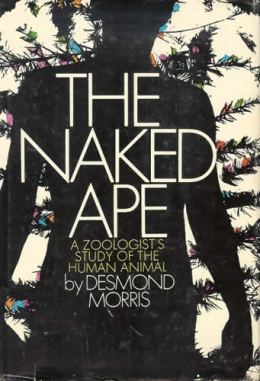
You only need to read the first two paragraphs of The Naked Ape to understand why it was so controversial when it debuted in 1967 and why it wound up on lists of banned books deemed “anti-Christian” by school boards. Morris, a zoologist, defines humans as hairless apes; he explores the conflict between our animal impulses and our loftier aspirations as matters of biology, not morality. We are the most sexual of primates, he says, and that sexuality has shaped modern civilization — not the other way around. Sure, no other animal creates art, nor do they obsessively analyze themselves. But thanks to our unique upright posture, we’re also the only primate whose secondary sex characteristics are on display whenever we interact, as Morris explains in detail. And we’re also unusual in that we mate to bond with each other as well as to procreate. All that makes for some serious biological tension, and Morris’ landmark views on why we evolved this way are fascinating — even in an age when the idea that we’re not all that different from our animal cousins isn’t quite so revolutionary.
We like to think we’re unique human beings, possessed of souls or free will and charting our own path through the universe. But science, as the 20th century unfolded, had some hard news for us. We did not transcend our biology but were a product of it, with human nature the result of millions of years of evolution hardwired into our bodies and brains. Edward O. Wilson, the Harvard biologist who got his start studying ant colonies, was on the front lines of this revolution, and his 1975 book Sociobiology was a founding text. After Sociobiology, which focused mostly on nonhuman species, Wilson turned his full attention to people. The result was 1979′s Pulitzer Prize–winning On Human Nature, which explained how human behavior, how sex and war and love and religion, were driven by genetics and evolution. But Wilson’s real achievement was to show how a sociobiological view of humanity could still have grandeur. As Wilson wrote: “The evolutionary epic is probably the best myth we will ever have.”
TIME meets the female Banksy bringing royalty to London’s streets
Melissa
Reblogged this on Swamp of Boredom and commented:
I’m reblogging this for my own reference and also to share with my readers (all 34 of you;)). Since the release of the 1001 Books App on Tuesday, I’ve been book list crazy. Since I like non-fiction – especially non-fiction centered on historical events and people, not so much current people – and have read a couple of excellent non-fiction books in the last year (Only Yesterday, Empire of the Summer Moon) I wondered if there was a list of recommended non-fiction books. Of course there is. I found one from the Guardain (UK) that is, obviously, geared towards British readers and that, unlike Time’s list, encompasses all non-fiction ever written. This list from Time consists of books only since Time began publishing, 1923. There are a few that don’t interest me at all and the biography choices focus too heavily on women and African Americans, IMO, but overall the list is excellent.
Enjoy!
As we prepare for the Game of Thrones finale, we recognize Joffrey and nine other baddies who showed us that terrible, horrible things can come in small packages