Politics and war, science and sports, memoir and biography — there's a great big world of nonfiction books out there just waiting to be read. We picked the 100 best and most influential written in English since 1923, the beginning of TIME ... magazine
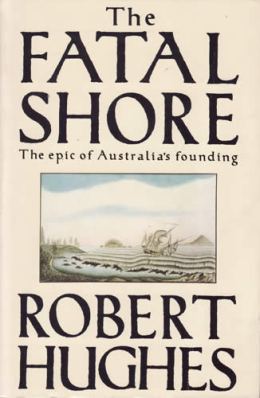
It could be argued that the Australian-born Robert Hughes had to move to America (where, for many years, he served as TIME’s art critic) in order to rediscover his home country and write about it with open eyes. And if the staggering achievement that is The Fatal Shore is anything to go by, that’s exactly what happened. It’s the shocking story of the social experiment that was the “transportation system” under which England exiled 160,000 criminals Down Under for the best part of 100 years, beginning in 1788.
Nearly 200 years later, Hughes rights the wrong of his nation, which had no comprehensive account of what became known as the “hated stain,” by penning this riveting account of Australia’s penal-colony origins. The reader is submerged in the dark heart of the subject matter, in this “land of inversions where it was high summer in January [and] trees kept their leaves but shed their bark.”
The ancient texts accidentally unearthed in 1945 at Nag Hammadi, Egypt, were a tremendous discovery. “For the first time,” Elaine Pagels writes in The Gnostic Gospels, “the heretics can speak for themselves.” They could speak, but Pagels, then a professor at Barnard, was the one who introduced them to the general public. Published in 1979, her book explores the tensions between Christian orthodoxy and Christian gnosticism (from the Greek gnosis,which, Pagels explains, means not “scientific or reflective knowledge” but “knowing through observation or experience”). The gnostic texts put forth wildly unorthodox (we say now) views concerning such basics as Jesus’ resurrection and the very nature of God. As Pagels shows, these writings from the early centuries C.E. “suggest that Christianity might have developed in very different directions — or that Christianity as we know it might not have survived at all.”
TIME meets the female Banksy bringing royalty to London’s streets
Melissa
Reblogged this on Swamp of Boredom and commented:
I’m reblogging this for my own reference and also to share with my readers (all 34 of you;)). Since the release of the 1001 Books App on Tuesday, I’ve been book list crazy. Since I like non-fiction – especially non-fiction centered on historical events and people, not so much current people – and have read a couple of excellent non-fiction books in the last year (Only Yesterday, Empire of the Summer Moon) I wondered if there was a list of recommended non-fiction books. Of course there is. I found one from the Guardain (UK) that is, obviously, geared towards British readers and that, unlike Time’s list, encompasses all non-fiction ever written. This list from Time consists of books only since Time began publishing, 1923. There are a few that don’t interest me at all and the biography choices focus too heavily on women and African Americans, IMO, but overall the list is excellent.
Enjoy!
As we prepare for the Game of Thrones finale, we recognize Joffrey and nine other baddies who showed us that terrible, horrible things can come in small packages