Politics and war, science and sports, memoir and biography — there's a great big world of nonfiction books out there just waiting to be read. We picked the 100 best and most influential written in English since 1923, the beginning of TIME ... magazine
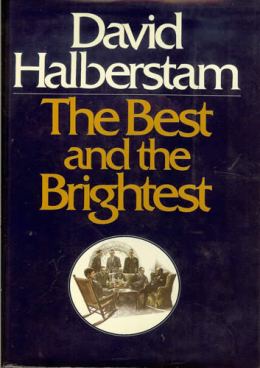
Halberstam’s title phrase was never intended to be a tribute to the accomplished, a fact lost on the countless scribes who have since appropriated it. The best and the brightest of the Kennedy and Johnson Administrations went to all the right schools and followed all the supposedly right procedures in engineering the Vietnam War. Look what happened. Halberstam sharpened his skepticism of elites as a student busboy in the cafeterias at Harvard. And as a reporter on the front lines in Southeast Asia, he stood out from the gaggle for his confrontational style with preening generals, with whom he refused to shake hands. Drawing on that experience, the reporter’s reporter defangs the whole lot by displaying how a steadfast faith in Pentagon models, in the face of contradictory reports from the ground, led to the deaths of more than 50,000 Americans in the rice paddies. The prolific war architect Walt Rostow could “see the bright side of any situation” and told defense analyst Daniel Ellsberg in 1965 that “victory is very near. I’ll show you the charts.” Indeed, Halberstam’s account, published in 1972, gave teeth to a generation’s firmly held conviction that it was the American authorities who were the real enemy. But The Best and the Brightest survives the tumult of Vietnam as the most devastating exposé yet crafted in American journalism of the dangers posed when a technocrat’s ego blinds him to reality.
Harvard academic Francis Fukuyama’s 1989 article in National Interest spawned his most famous work, published three years later. As Soviet communism collapsed and movements for freedom and democracy in Eastern Europe captured the world’s imagination, Fukuyama suggested that the time was not far off when every nation-state would become a liberal democracy. Invoking the 19th century philosopher Hegel, who thought of history as a kind of evolutionary process, Fukuyama imagined a natural “teleological” end whereby the pinnacle of human development would be in societies based on democracy and capitalism. In an era of optimism, The End of History won Fukuyama near instant celebrity and influenced a whole swath of prominent commentators and advocates of globalization, like “earth is flat” proponent Thomas Friedman. But history, as Fukuyama surely accepts, has not ended. The world looks no closer to being one large European Union — and with the success of decidedly undemocratic China and the rise of reactionary, extremist right-wing movements throughout the West, some argue that it’s Fukuyama’s liberal democracy whose future lies in shadow.
TIME meets the female Banksy bringing royalty to London’s streets
Melissa
Reblogged this on Swamp of Boredom and commented:
I’m reblogging this for my own reference and also to share with my readers (all 34 of you;)). Since the release of the 1001 Books App on Tuesday, I’ve been book list crazy. Since I like non-fiction – especially non-fiction centered on historical events and people, not so much current people – and have read a couple of excellent non-fiction books in the last year (Only Yesterday, Empire of the Summer Moon) I wondered if there was a list of recommended non-fiction books. Of course there is. I found one from the Guardain (UK) that is, obviously, geared towards British readers and that, unlike Time’s list, encompasses all non-fiction ever written. This list from Time consists of books only since Time began publishing, 1923. There are a few that don’t interest me at all and the biography choices focus too heavily on women and African Americans, IMO, but overall the list is excellent.
Enjoy!
As we prepare for the Game of Thrones finale, we recognize Joffrey and nine other baddies who showed us that terrible, horrible things can come in small packages