Politics and war, science and sports, memoir and biography — there's a great big world of nonfiction books out there just waiting to be read. We picked the 100 best and most influential written in English since 1923, the beginning of TIME ... magazine
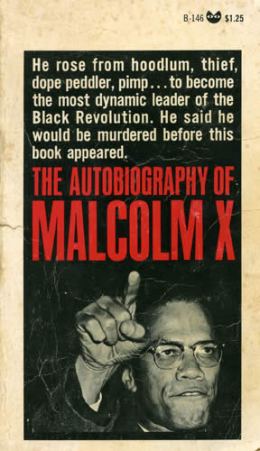
During Alex Haley’s interview sessions with Malcolm X, the then spokesman for the Nation of Islam scribbled notes on small pieces of paper. Eventually Haley would use them to form his autobiography and the basis of much of the study of his character.
The book begins with his description of his tumultuous childhood and takes the reader into his youth in Harlem’s heyday. It also places him inside the criminal underworld, in prison and finally in the center of the civil rights movement. The prose follows Malcolm X’s direct manner of speaking to ensure that readers see his life through his eyes and is gripping enough to capture both subject and environment.
Malcolm X predicted that he would not live to see its publication, a prophecy fulfilled as friction between himself and the Nation of Islam, and a subsequent falling-out culminated in his 1965 assassination. But the pages chronicling the years leading up to it reveal the world of a man who had gone from being a hustler to being one of history’s most controversial civil rights icons.
The Last Lion: Winston Spencer Churchill: Alone, 1932-1940 (published in 1988) was William Manchester’s sequel to The Last Lion: Winston Spencer Churchill: Visions of Glory, 1874-1932 (published in 1983). Alone picks up the story with Churchill cast into the political wilderness and entering what the author believed was the most crucial period of the politician’s extraordinary life — his “finest hour,” if you will — which culminated in his becoming Prime Minister of Britain in 1940, his country once again at war with Germany. Churchill, as Manchester poignantly puts it, “resolved to lead Britain and her fading empire in one last great struggle worthy of all they had been.”
Manchester’s acumen is to deftly juxtapose the political analysis with highly readable prose, neglecting neither the events nor the reader. But skilled a wordsmith as Manchester was, not even he could cheat death, and so the proposed third volume — tentatively titled The Last Lion: Defender of the Realm, 1940-1965 and scheduled for publication in 2011 — will be finished by his close friend Paul Reid. Manchester and Reid shared a love of the Boston Red Sox, and Reid likened the task of finishing Manchester’s trilogy to being called to end a game for Red Sox legend Ted Williams.
TIME meets the female Banksy bringing royalty to London’s streets
Melissa
Reblogged this on Swamp of Boredom and commented:
I’m reblogging this for my own reference and also to share with my readers (all 34 of you;)). Since the release of the 1001 Books App on Tuesday, I’ve been book list crazy. Since I like non-fiction – especially non-fiction centered on historical events and people, not so much current people – and have read a couple of excellent non-fiction books in the last year (Only Yesterday, Empire of the Summer Moon) I wondered if there was a list of recommended non-fiction books. Of course there is. I found one from the Guardain (UK) that is, obviously, geared towards British readers and that, unlike Time’s list, encompasses all non-fiction ever written. This list from Time consists of books only since Time began publishing, 1923. There are a few that don’t interest me at all and the biography choices focus too heavily on women and African Americans, IMO, but overall the list is excellent.
Enjoy!
As we prepare for the Game of Thrones finale, we recognize Joffrey and nine other baddies who showed us that terrible, horrible things can come in small packages