Politics and war, science and sports, memoir and biography — there's a great big world of nonfiction books out there just waiting to be read. We picked the 100 best and most influential written in English since 1923, the beginning of TIME ... magazine
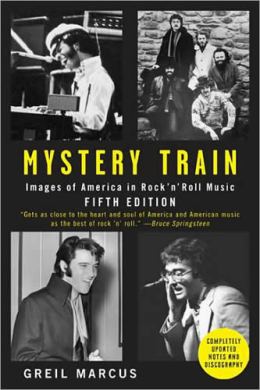
“The words had an echo in them.” That’s music critic Greil Marcus, more than three decades after the 1975 publication of Mystery Train, writing about why he co-opted the title of Elvis Presley’s last Sun Records single. Yet it’s Marcus’ words that still echo today, mainly because the arrival of Mystery Train was akin to an explosion, the effects of which have rippled forward in time. A critical look at four rock acts — the Band, Sly Stone, Randy Newman and Elvis — Marcus’ work proved once and for all that one can write about popular music with the same sense of importance and sophistication with which one writes about high art. Indeed, rock ‘n’ roll was not just “youth culture, or counterculture, but simply … American culture.” This idea, borrowed from the Band’s Robbie Robertson, that “the land makes the music,” shone a light on what is the great and true American sound and influenced the manner in which pop culture as a whole is treated and talked about and regarded. He helped make it respectable.
“There really is no such thing as Art,” is how one of the greatest and most assured of all art histories opens. “There are only artists.” E.H. Gombrich was a Viennese Jew who relocated to Britain in advance of Hitler’s annexation of Austria and remained there for the rest of his life. One of the most distinguished scholars of the 20th century, he had an unparalleled gift for expressing complex ideas in enchantingly plainspoken terms. To read The Story of Art, first published in 1950 and updated periodically, is like listening to the conversation of an impossibly learned but lighthearted old friend as he leads you from the cave painters to post-Modernism. (It may have helped that Gombrich dictated the book.) Above all, he tells us, in every era, the great artists arrived at new ways of seeing. “The Egyptians had based their art on knowledge,” he writes. “The Greeks began to use their eyes. Once this revolution had begun, there was no stopping it.”
TIME meets the female Banksy bringing royalty to London’s streets
Melissa
Reblogged this on Swamp of Boredom and commented:
I’m reblogging this for my own reference and also to share with my readers (all 34 of you;)). Since the release of the 1001 Books App on Tuesday, I’ve been book list crazy. Since I like non-fiction – especially non-fiction centered on historical events and people, not so much current people – and have read a couple of excellent non-fiction books in the last year (Only Yesterday, Empire of the Summer Moon) I wondered if there was a list of recommended non-fiction books. Of course there is. I found one from the Guardain (UK) that is, obviously, geared towards British readers and that, unlike Time’s list, encompasses all non-fiction ever written. This list from Time consists of books only since Time began publishing, 1923. There are a few that don’t interest me at all and the biography choices focus too heavily on women and African Americans, IMO, but overall the list is excellent.
Enjoy!
As we prepare for the Game of Thrones finale, we recognize Joffrey and nine other baddies who showed us that terrible, horrible things can come in small packages