Politics and war, science and sports, memoir and biography — there's a great big world of nonfiction books out there just waiting to be read. We picked the 100 best and most influential written in English since 1923, the beginning of TIME ... magazine
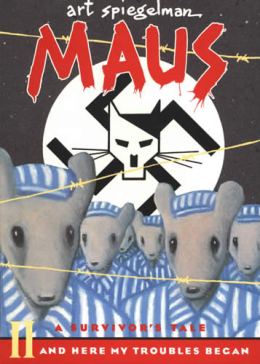
The two volumes of Art Spiegelman’s Maus: A Survivor’s Tale, published in book form in 1986 and ’91, defy classification. The remarkable work has a rightful place on our list of top 10 graphic novels; TIME’s Lev Grossman has noted that Maus’ Pulitzer was “a landmark event in the history of the medium — its sheer power forced the mainstream world to take comics seriously.” Yet Maus — in which the artist-author not only tells the true story of his father Vladek, a Holocaust survivor, but also conveys the complicated relationship between father and son — can just as rightly lay claim to being among the best memoirs ever written. Spiegelman draws the Jews as mice, the Nazis as cats and the Poles as pigs, all the while drawing the reader closer to the truth. As Grossman wrote, “the cartoonish conceit doesn’t trivialize the story; it makes it viscerally real — it strips away our practiced indifference to an all-too-familiar story. Those mice are more human than most people.”
Ernest Hemingway begins his memoir of Paris in the 1920s with a scene from autumn, when “all the sadness of the city came suddenly with the first cold rains of winter.” It’s a mood that returns when he leaves Paris at the end of the book, his first marriage in shambles but his faith in the transformative power of the city intact. In between, we relive his heady encounters with Gertrude Stein, his friendship with F. Scott Fitzgerald, warm days in the Jardin du Luxembourg and walks along cramped and ancient streets where goatherds still ply their trade, calling for customers to come down with pots and milk the animals. It was a Paris of another time, not just for modern readers but for Hemingway: he wrote the book in the 1950s, long after he’d left France and not long before he died in 1961. Reading it can be a wistful experience, but as he says on the last page, “Paris was always worth it.”
TIME meets the female Banksy bringing royalty to London’s streets
Melissa
Reblogged this on Swamp of Boredom and commented:
I’m reblogging this for my own reference and also to share with my readers (all 34 of you;)). Since the release of the 1001 Books App on Tuesday, I’ve been book list crazy. Since I like non-fiction – especially non-fiction centered on historical events and people, not so much current people – and have read a couple of excellent non-fiction books in the last year (Only Yesterday, Empire of the Summer Moon) I wondered if there was a list of recommended non-fiction books. Of course there is. I found one from the Guardain (UK) that is, obviously, geared towards British readers and that, unlike Time’s list, encompasses all non-fiction ever written. This list from Time consists of books only since Time began publishing, 1923. There are a few that don’t interest me at all and the biography choices focus too heavily on women and African Americans, IMO, but overall the list is excellent.
Enjoy!
As we prepare for the Game of Thrones finale, we recognize Joffrey and nine other baddies who showed us that terrible, horrible things can come in small packages