Politics and war, science and sports, memoir and biography — there's a great big world of nonfiction books out there just waiting to be read. We picked the 100 best and most influential written in English since 1923, the beginning of TIME ... magazine
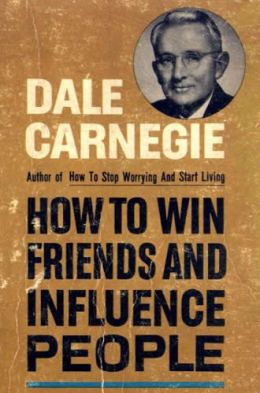
There aren’t many people who don’t want to be liked or influential. Which may be the primary reason that Dale Carnegie’s How to Win Friends & Influence People, first printed in 1937, has become such a classic. After all, as many can attest, it’s not what you know but whom you know — and whether or not they like you. Drawing on the words of Sigmund Freud, William James and Abraham Lincoln (as well as anecdotes from everyday people), Carnegie’s book offers a list of tenets to help readers lead in life and work: offer honest appreciation to others, smile freely and don’t ever call direct attention to people’s mistakes. “Show respect for the other person’s opinions,” reads one of Carnegie’s rules. “Never say, ‘You’re wrong.’” How to Win Friends was one of the first major self-help books, paving the way for one of the publishing industry’s most reliable and lucrative genres. And it’s arguably the most influential; its sage advice rings true nearly 75 years later.
Known as the bible of the antiglobalization movement, Naomi Klein’s No Logo catalogs the modern history of branding and casts the labels from your closet and fridge — Coca-Cola, Gap and Nike — as the Great Satans of the marketplace. These multinationals leave no billboard unplastered, squelch all competition and drive up profits on the backs of the exploited poor of the First and Third Worlds. A string of passionately woven anecdotes, like one about Nike factory workers being beaten with shoe parts in Vietnam, amounted to a call to action in an era known for activism like the protests at the 1999 WTO conference in Seattle. And the Canadian-born journalist is not above the radical’s method of elevating bogeymen in the interest of nurturing rage. “Logos have grown so dominant that they have essentially transformed the clothing on which they appear into empty carriers for the brands they represent,” she writes. Maybe so, but sometimes a T-shirt is just a T-shirt.
TIME meets the female Banksy bringing royalty to London’s streets
Melissa
Reblogged this on Swamp of Boredom and commented:
I’m reblogging this for my own reference and also to share with my readers (all 34 of you;)). Since the release of the 1001 Books App on Tuesday, I’ve been book list crazy. Since I like non-fiction – especially non-fiction centered on historical events and people, not so much current people – and have read a couple of excellent non-fiction books in the last year (Only Yesterday, Empire of the Summer Moon) I wondered if there was a list of recommended non-fiction books. Of course there is. I found one from the Guardain (UK) that is, obviously, geared towards British readers and that, unlike Time’s list, encompasses all non-fiction ever written. This list from Time consists of books only since Time began publishing, 1923. There are a few that don’t interest me at all and the biography choices focus too heavily on women and African Americans, IMO, but overall the list is excellent.
Enjoy!
As we prepare for the Game of Thrones finale, we recognize Joffrey and nine other baddies who showed us that terrible, horrible things can come in small packages