Politics and war, science and sports, memoir and biography — there's a great big world of nonfiction books out there just waiting to be read. We picked the 100 best and most influential written in English since 1923, the beginning of TIME ... magazine
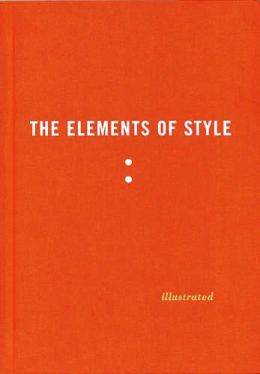
Brevity isn’t simple, but for writers it’s obligatory. No one knew this better than professor William Strunk Jr., who in 1918 developed and privately published the first edition of The Elements of Style, a now revered guidebook outlining essential rules of the English language. Revised in 1957 by New Yorker writer E.B. White (Charlotte’s Web), The Elements of Style has managed to maintain its original purpose over the years, even as our language has become less formal. That’s because the rules aren’t suggestions but grammatical demands for the composition of sentences, paragraphs and total bodies of work. Reading the “Little Book” is almost like sitting in an elementary English class, which seems to be how the authors intended it. Strunk and White waded through the totality of our vast and complicated language and boiled it down to a terse 105 pages, including a glossary and index. No exhaustive explanations or sentence diagrams here — just 22 style rules and principles of composition, followed by “a few matters of form,” a conclusive list of misused words and phrases and an all-encompassing “guide to style,” composed postscript by White. The Elements of Style is a timeless reminder of the simplicity of proper writing and is likely to remain a useful tool for years to come.
In her indictment of the American funeral industry, Mitford argued that death had become too commercial and that undertakers — now billing themselves as “funeral directors” — were ripping off the bereaved. The industry had, in her words, perpetrated “a huge, macabre and expensive practical joke on the American public.” She compared morticians to unscrupulous salesmen and dissected the utility of the products and services they pushed in front of those in mourning. (Does a corpse really need to rest on an extra-soft mattress inside a casket?) Through this muckraking piece of journalism, Mitford sparked numerous legislative reforms. And at the end of her life, she proved that she believed in what she had written: following her wishes, her family cremated her for $475.
TIME meets the female Banksy bringing royalty to London’s streets
Melissa
Reblogged this on Swamp of Boredom and commented:
I’m reblogging this for my own reference and also to share with my readers (all 34 of you;)). Since the release of the 1001 Books App on Tuesday, I’ve been book list crazy. Since I like non-fiction – especially non-fiction centered on historical events and people, not so much current people – and have read a couple of excellent non-fiction books in the last year (Only Yesterday, Empire of the Summer Moon) I wondered if there was a list of recommended non-fiction books. Of course there is. I found one from the Guardain (UK) that is, obviously, geared towards British readers and that, unlike Time’s list, encompasses all non-fiction ever written. This list from Time consists of books only since Time began publishing, 1923. There are a few that don’t interest me at all and the biography choices focus too heavily on women and African Americans, IMO, but overall the list is excellent.
Enjoy!
As we prepare for the Game of Thrones finale, we recognize Joffrey and nine other baddies who showed us that terrible, horrible things can come in small packages