Politics and war, science and sports, memoir and biography — there's a great big world of nonfiction books out there just waiting to be read. We picked the 100 best and most influential written in English since 1923, the beginning of TIME ... magazine
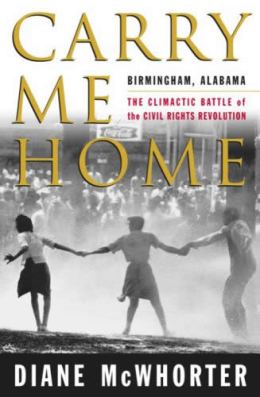
Diane McWhorter’s 2001 Pulitzer Prize–winning masterpiece, Carry Me Home, will exhaust you. Yes, it is a dense 700-page read about the civil rights movement in Birmingham, Ala. But more important, it will exhaust you emotionally. On Sept. 15, 1963, McWhorter was a white girl living in Birmingham, almost the same age as four black girls killed by a bomb at the 16th Street Baptist Church. McWhorter was too young and too sheltered to understand what was happening at the time. (The only direct repercussion she experienced from the bombing was that her school’s Music Manrehearsals were canceled.) In a way, this book serves as her attempt at redemption. The story of Birmingham is the story of Klansmen, sanctioned police brutality and racism so ingrained in Southern culture that even Martin Luther King Jr. wasn’t sure he could beat it. “All those marches,” McWhorter writes, “just for the right to eat a hot dog at a lunch counter.”
Since its publication in 1949, Joseph Campbell’s seminal work on the archetypal heroes and myths shared by world religions and traditions has focused countless artists and academics on our cultural commonalities rather than our differences. Legend has it that George Lucas used Campbell’s book as a foundation for his Star Wars trilogy. Harry Potter also closely hews to the classic hero’s journey that Campbell drew from ancient allegories in dozens of cultures and codified into one rollicking human epic, a universal saga that he referred to as the monomyth and that, he argued, sits deep in our subconscious, woven into all our rituals, from marriage to burial. A prolific author and editor, he believed that people need these superhuman figures because they are “the symbols that carry the human spirit forward.” But in a wistful last chapter, he noted that modernity has devalued this collective consciousness in favor of self-expression and a fragmented culture tilted toward science and economics. In his view, we are enriched and supported when we embrace the “oneness of the individual and the group.” Today that bond is frayed. “The lines of communication between the conscious and unconscious zones of the human psyche have all been cut,” Campbell wrote, “and we have been split in two.”
TIME meets the female Banksy bringing royalty to London’s streets
Melissa
Reblogged this on Swamp of Boredom and commented:
I’m reblogging this for my own reference and also to share with my readers (all 34 of you;)). Since the release of the 1001 Books App on Tuesday, I’ve been book list crazy. Since I like non-fiction – especially non-fiction centered on historical events and people, not so much current people – and have read a couple of excellent non-fiction books in the last year (Only Yesterday, Empire of the Summer Moon) I wondered if there was a list of recommended non-fiction books. Of course there is. I found one from the Guardain (UK) that is, obviously, geared towards British readers and that, unlike Time’s list, encompasses all non-fiction ever written. This list from Time consists of books only since Time began publishing, 1923. There are a few that don’t interest me at all and the biography choices focus too heavily on women and African Americans, IMO, but overall the list is excellent.
Enjoy!
As we prepare for the Game of Thrones finale, we recognize Joffrey and nine other baddies who showed us that terrible, horrible things can come in small packages