Politics and war, science and sports, memoir and biography — there's a great big world of nonfiction books out there just waiting to be read. We picked the 100 best and most influential written in English since 1923, the beginning of TIME ... magazine
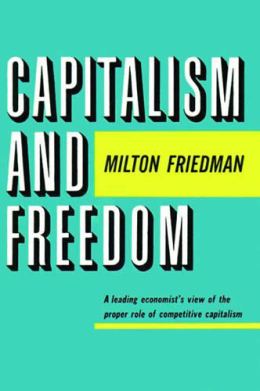
Milton Friedman, a Nobel Prize–winning economist, may have been the first modern-day Tea Partyer. In Capitalism and Freedom, published in 1962, Friedman makes his most important contribution to his profession: the argument that the best medicine for curing a recession and stabilizing economies is for a nation’s central bank (the Federal Reserve for the U.S.) to be slowly but constantly increasing the amount banks are allowed to lend and therefore increasing the supply of money — but only in brief. Instead of economic proofs, Friedman spends much of the book urging government restraint; he starts off by condemning John F. Kennedy’s famous “Ask not what your country can do for you” inaugural address, saying it reduces the individual to a serf with the government as his master. Friedman always thought it should be the other way around.
“I aimed for the public’s heart,” wrote Upton Sinclair, referring to his muckraking hit The Jungle, “and by accident, I hit it in the stomach.” When Eric Schlosser came out with Fast Food Nation: The Dark Side of the All-American Meal in 2001, it was hailed as a modern-day Jungle, and with good reason. The book’s most memorable sections pull back the veil of the fast-food infrastructure and reveal the horrific conditions of modern American slaughterhouses — both for the cattle who were eviscerated in bloody fashion and for the immigrant labor force paid too little for work that was too dangerous.
But it would be a mistake to treat Fast Food Nation as just another piece of stomach-turning, muckraking literature. Schlosser did far more, connecting the rise and consolidation of the fast-food industry in America to the declining power of labor unions, sliding blue-collar wages and growing income inequality. “The basic thinking behind fast food has become the operating system of today’s retail economy,” writes Schlosser. We all live in Fast Food Nation.
TIME meets the female Banksy bringing royalty to London’s streets
Melissa
Reblogged this on Swamp of Boredom and commented:
I’m reblogging this for my own reference and also to share with my readers (all 34 of you;)). Since the release of the 1001 Books App on Tuesday, I’ve been book list crazy. Since I like non-fiction – especially non-fiction centered on historical events and people, not so much current people – and have read a couple of excellent non-fiction books in the last year (Only Yesterday, Empire of the Summer Moon) I wondered if there was a list of recommended non-fiction books. Of course there is. I found one from the Guardain (UK) that is, obviously, geared towards British readers and that, unlike Time’s list, encompasses all non-fiction ever written. This list from Time consists of books only since Time began publishing, 1923. There are a few that don’t interest me at all and the biography choices focus too heavily on women and African Americans, IMO, but overall the list is excellent.
Enjoy!
As we prepare for the Game of Thrones finale, we recognize Joffrey and nine other baddies who showed us that terrible, horrible things can come in small packages