Politics and war, science and sports, memoir and biography — there's a great big world of nonfiction books out there just waiting to be read. We picked the 100 best and most influential written in English since 1923, the beginning of TIME ... magazine
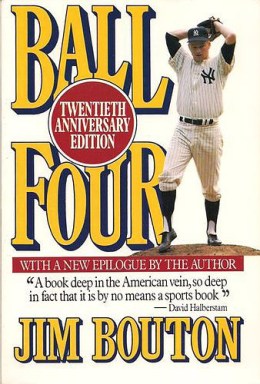
Baseball players love to guzzle beer, break curfew and chase skirts. Most aren’t scholars and are quick to pop a “greenie” — amphetamines — for an extra kick before the game. These are long-accepted truisms about today’s professional athletes. But in 1970, when former major-league pitcher Jim Bouton shared locker-room secrets in his behind-the-scenes memoir about the 1969 baseball season, such revelations shocked the sports world. Up to that point, pro athletes were bubblegum heroes: the media did not pry into their private lives. Bouton, who slyly took notes and whispered into a tape recorder while playing for the expansion Seattle Pilots and Houston Astros, exposes baseball owners as greedy penny pinchers and coaches as buffoons who state the obvious. The book caused such an uproar that baseball commissioner Bowie Kuhn asked Bouton to sign a statement saying Ball Four was a big lie. Bouton declined: the book was honest, insightful and hilarious, and it changed the way the public views its sports “heroes.”
In 2002, Sports Illustrated named The Sweet Science, a collection of A.J. Liebling’s boxing essays published in the New Yorker, the greatest sports book of all time. The reporting of Liebling, a former war correspondent as fluid in press criticism and French culture as he was in pugilism, takes readers far outside the ring on fight day. His conversations with cab drivers, saloon keepers and fans in the stands show the depth to which 1950s boxing was entrenched in American culture (while reminding the reader of the sport’s irrelevance today). Liebling is more sociologist than sports reporter: he foreshadowed the corporatization of big-time sports, calling television a “ridiculous gadget” used “in the sale of beer and razor blades.” In noting the dearth of rising boxing stars in America’s poorer precincts, Liebling wrote that “there exists several generalized conditions today, like full-employment and a late-school leaving age, that militate against the development of first-rate professional boxers.” Ah, full employment: Liebling’s book serves as a stark reminder that boxing — and America — has seen better days.
TIME meets the female Banksy bringing royalty to London’s streets
Melissa
Reblogged this on Swamp of Boredom and commented:
I’m reblogging this for my own reference and also to share with my readers (all 34 of you;)). Since the release of the 1001 Books App on Tuesday, I’ve been book list crazy. Since I like non-fiction – especially non-fiction centered on historical events and people, not so much current people – and have read a couple of excellent non-fiction books in the last year (Only Yesterday, Empire of the Summer Moon) I wondered if there was a list of recommended non-fiction books. Of course there is. I found one from the Guardain (UK) that is, obviously, geared towards British readers and that, unlike Time’s list, encompasses all non-fiction ever written. This list from Time consists of books only since Time began publishing, 1923. There are a few that don’t interest me at all and the biography choices focus too heavily on women and African Americans, IMO, but overall the list is excellent.
Enjoy!
As we prepare for the Game of Thrones finale, we recognize Joffrey and nine other baddies who showed us that terrible, horrible things can come in small packages