Politics and war, science and sports, memoir and biography — there's a great big world of nonfiction books out there just waiting to be read. We picked the 100 best and most influential written in English since 1923, the beginning of TIME ... magazine
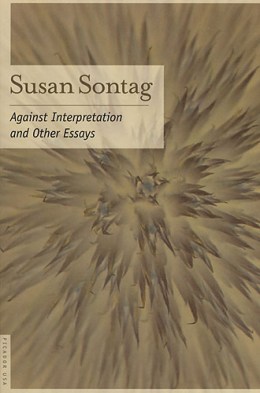
Among her many identities — novelist, playwright, film director and human-rights activist — Susan Sontag was perhaps most widely known as a searing intellectual. Her first work of nonfiction, Against Interpretation, published in 1966, was a sweeping assessment of art and contemporary culture — as well as an instant classic. With her insatiable appetite for creativity in all its forms, Sontag produces a collection of essays that is an ambitious work. Discussing everything from Sartre to camp, Godard to science fiction — the highbrow-lowbrow distinction wasn’t one that Sontag was concerned with — the book aimed to be a critique of modern thinking about art. In the title essay, Sontag makes the case against overintellectualizing art. Rather than dissect art and its context and consequently eviscerate its beauty, she argues that the beauty of art should be appreciated for what it is. The book was an immediate hit and established Sontag as an influential cultural critic.
What if Shakespeare had had a sister as naturally gifted as he was? Would she have grown up to be the most acclaimed writer of the English language? Or would her genius have languished at home, smothered by household chores, the demands of family and an inability to call her life her own? This is the question Virginia Woolf poses in A Room of One’s Own, the slim volume adapted from a series of lectures she gave at Cambridge University in 1928 that became a founding pillar of feminism. Woolf throws down the gauntlet: “A woman must have money and a room of her own if she is to write fiction,” and, in a beguiling, conversational tone far removed from the complex rhythms of her fiction, investigates all the factors that routinely get in the way. She first delivered these words at a time when the women in her audience were far more disenfranchised — it had been only a decade since they got the right to vote. But Woolf’s work resonates just as powerfully today, every time individual creativity comes into conflict with the demands of a very commercial world.
TIME meets the female Banksy bringing royalty to London’s streets
Melissa
Reblogged this on Swamp of Boredom and commented:
I’m reblogging this for my own reference and also to share with my readers (all 34 of you;)). Since the release of the 1001 Books App on Tuesday, I’ve been book list crazy. Since I like non-fiction – especially non-fiction centered on historical events and people, not so much current people – and have read a couple of excellent non-fiction books in the last year (Only Yesterday, Empire of the Summer Moon) I wondered if there was a list of recommended non-fiction books. Of course there is. I found one from the Guardain (UK) that is, obviously, geared towards British readers and that, unlike Time’s list, encompasses all non-fiction ever written. This list from Time consists of books only since Time began publishing, 1923. There are a few that don’t interest me at all and the biography choices focus too heavily on women and African Americans, IMO, but overall the list is excellent.
Enjoy!
As we prepare for the Game of Thrones finale, we recognize Joffrey and nine other baddies who showed us that terrible, horrible things can come in small packages