

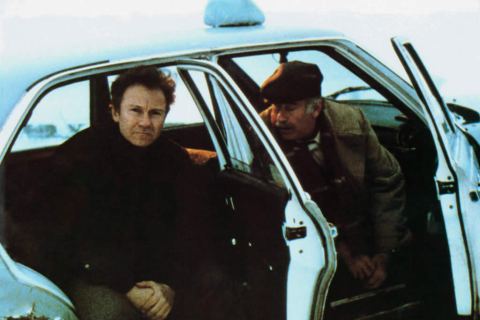
A minimalist with an epic vision, Angelopoulos has created imposing cinematic tableaux about his homeland, from his first international successes, Days of ’36 and Traveling Players. Typically, each scene, which may run for two, three or 10 mins., is a single shot, in which the educated eye discovers all manner of subtle drama in furtive glances, in silences when there’s nothing to say, in the corners of the screen. Ulysses’ Gaze is nothing less than a synopsis of 20th century Greek history in a film of about three hours and 60 shots. Dozens, then hundreds of protestors materialize on an Athens street. A ship with a huge bust of Lenin floats down a canal. The most amazing scene, again a single shot, tells the story of five family gatherings on New Year’s Eve during the Communist insurgency from 1945 to 1950. “Auld Lang Syne” is sung; a son is arrested; the son returns; a death is announced; “Auld Lang Syne.” Life, Angelopoulos says, is a pageant best seen from a distance, where we can discern its larger contours, its greater meaning, its unbearable and heroic poignance.
[youtube=http://www.youtube.com/watch?v=DaUEulIEBV8]