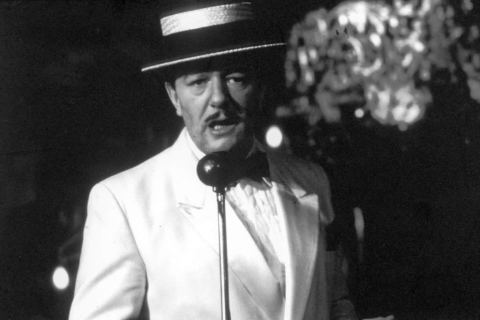
Jon Amiel was the director of this magnificent six-part BBC series, and a suave job he made of it. But the true guiding and compelling force was the author, Dennis Potter. He poured much of his own biography into the script—a childhood in the Forest of Dean, a lifelong siege of crippling eczema—then extended it into the interior epic of a hospitalized pulp-fiction writer (named Philip Marlow!) whose agonized misery drives him into dark fantasy and bitter memory. It’s Potter’s voice that rages in every superb, suppurating monologue, that soars with each vintage tune running through the hero’s addled mind. A fable of degeneration (shown with brutal precision) and regeneration (not entirely persuasive), the piece alternates ferocious confessional elements with bursts of musical comedy. The anger is cathartic for Marlow, the music transporting; its lilt almost allows him to cruise down a river toward sanity. In what is essentially a one-man show, Michael Gambon gives one the fiercest, most acute performances in modern film. Yes, Virginia, it is a film, a 6hr. 48min. one, made with unflinching brilliance.
The Seventh Seal, made the following year, would establish Bergman as cinema’s prime movie metaphysician; Wild Strawberries and The Virgin Spring would stamp his pure, dour philosophy on a generation of filmmakers and viewers. As much as anyone, he convinced the world that film was an art, and that handsome faces suffering in closeup could be the visual equivalent of literature. Yet it was this comedy that earned “the solemn Swede” his first international eminence. On the long night of the summer solstice, ten people from the aristocracy, the bourgeoisie and the servant class stumble through brief trysts until they find their proper mates. Indefatigable lover of women’s wisdom, remorseless anatomizer of men’s insecurities, Bergman would make sterner, possibly more profound works, but never again one so blithely understanding of the mischief humans commit on one another—the folly they know is sex and fleetingly convince themselves is love.
Sue me, but I like Betty Draper/Francis as a character. The problem is that Mad Men doesn’t. Betty’s not the worst character on the show, but she’s probably the worst-served.