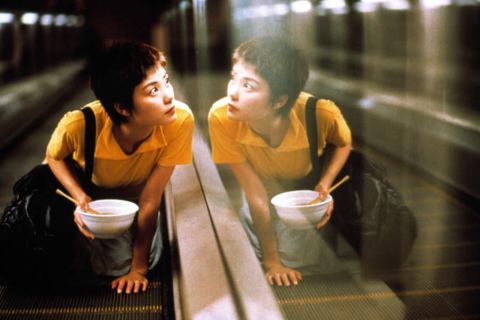
The epitome and apotheosis of art-house romance in the 90s, Wong Kar-wai developed a style like no other director —though, as his renown grew beyond China, dozens tried. It is atmosphere used to create the most fleeting or lasting emotion, a mix of longing gazes, swirling cigarette smoke, double-printed slo-mo images and the Colony’s most gorgeous actors. Wong might have gone higher with the Eastern Western Ashes of Time, and deeper with that aching epic 2046, but we’ll choose the more lighthearted Chungking Express as an admirable starter set. It’s a set because the film tells two stories: one of young Takeshi Kaneshiro falling for ageless Brigitte Lin, the other pairing Hong Kong cop Tony Leung Chiu-wai with the elfin beauty Faye Wong. With his two essential collaborators, cinematographer Christopher Doyle and designer William Chang, Wong weaves a tapestry of longing and seduction that puts both the characters and the audience in the mood for love. The love story is a genre inexplicably ignored by both art-house and commercial directors. Isn’t it lovely, then, that Wong Kar-wai is always in that mood?
Named the greatest of all films in poll after critics’ poll for the past half-century, Kane might by now seem suitable for viewing not through the glass of the movie projector but under glass, in the museum of outmoded innovations. So, cynics say, Welles had the camera lowered and photographed the ceilings over his actors’ heads… so, the impresario of CBS’ Mercury Theatre On the Air hijacked radio techniques and put them on film… so, he shot scenes nearly in the dark, to save the cost of dressing a set. So what? This crypto-biography of newspaper tycoon William Randolph Hearst worked, fabulously, thanks to the insider’s knowledge and narrative savvy of screenwriter Herman J. Mankiewicz, to cinematographer Gregg Toland’s openness to experiment (he virtually created the film-noir style with this film) and, of course, to the boy-genius vigor the 25-year-old Welles brought to his first Hollywood enterprise. The kid who had never made a movie ignored the rules, and remade movies. We don’t need to replace Citizen Kane with another all-time great film—its expansive, epic vitality remains fresh—but we sure could use another Welles.
The Foo Fighters captured five Grammys and Adele won four, including the song of the year trophy for “Rolling in the Deep,” at a Grammy ceremony that had the difficult task of celebrating music’s best while mourning the loss of one of their greatest, Whitney Houston.
From Nicki Minaj’s Red Riding Hood getup to Katy Perry’s head-to-toe blue ensemble, TIME rounds up some of the best (and worst!) sartorial choices at the annual music awards show.