
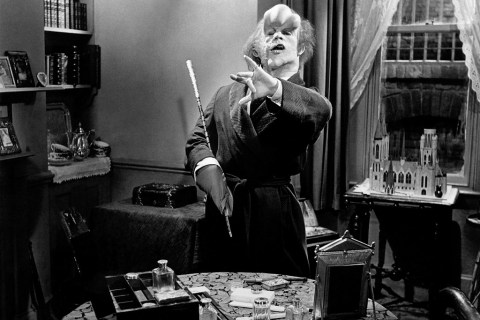
The Elephant Man

It’s ironic that director David Lynch’s most human (and humane) film would have as its subject a poor soul afflicted with a monstrous deformity. (Or that one of its three producers was Mel Brooks. Yes, that Mel Brooks.) John Merrick (played by John Hurt), the movie’s title character, has endured a miserable existence as a sideshow freak in Victorian London. He attracts the attention of kindly surgeon Dr. Frederick Treves (Anthony Hopkins), who befriends Merrick and eventually arranges for him to live at the hospital. Lynch and veteran cinematographer Freddie Francis give the film an undercurrent of anxiety, and a dreamy uneasiness lurks in the many shadows. “I always thought of [The Elephant Man] as a black-and-white film,” Lynch would later observe. “Black and white immediately takes you out of the real world.”
Stranger Than Paradise

It should be unwatchable: a plotless and meandering movie, shot on a bare-bones budget, performed by a cast made up mostly of nonprofessional actors. But Jim Jarmusch’s Stranger Than Paradise is eminently watchable and, in fact, best appreciated after repeat viewings. More than that, the movie — a series of events involving a trio of disaffected and lonely souls — played a significant role in the explosive growth of the American independent-film scene and influenced a generation of young directors who sought to duplicate its restless-cool vibe. Speaking about the film’s effective use of black-screen “slugs” to separate individual scenes, Jarmusch told an interviewer that he was influenced by his love of literary forms: “Poetry is very beautiful, but the space on the page can be as affecting as where the text is. Like when Miles Davis doesn’t play, it has a poignancy to it.”


