

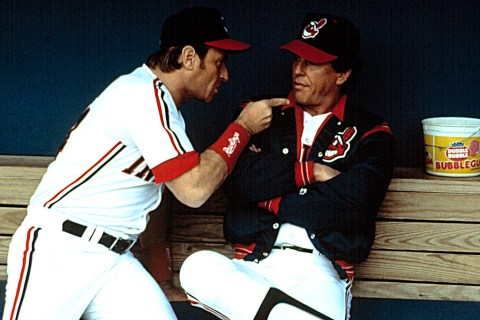
A boy’s sport, a man’s game. Baseball lodges in the American male heart because the fundamentals look easy enough for any Little Leaguer to master. Too soon, men realize that pro ball demands a genius for grace, concentration and magnificent egotism. They may agonize over the career path not chosen, the debt too steep, the woman so close but just beyond their reach. For many, though, a dream of athletic stardom is the one that got away. So they stick with baseball, living and dying with their team, analyzing stats with the rapt anguish of a rabbinical student cramming for a final. To their favorite players, they are both sons and fathers — part hero worshippers, part child psychologists. They become a collective, possessive lover of their idols. Baseball fever: boys catch it, men can’t shake it.
In the late 1980s and early ’90s, Hollywood got the fever. Bull Durham, Eight Men Out, Stealing Home, Talent for the Game, A League of Their Own and Mr. Baseball swarmed into theaters like kids onto a sandlot. In 1989, two baseball movies opened in the same month (April, of course): Field of Dreams, which a heartless TIME critic panned as “the male weepie at its wussiest,” and the good-natured comedy we honor here. Writer-director David S. Ward (he penned The Sting) imagines the real Cleveland Indians team as a bunch of loopy rejects from the Mexican, minor and California Penal leagues. Now coming to bat: the veteran catcher on his last legs (Tom Berenger), the Willie Mays wannabe (Wesley Snipes), the pampered third baseman (Corbin Bernsen). And on the mound, a fastballer (Charlie Sheen) with control problems on and off the field. With this gang, in this comic fantasy, the Tribe can’t lose.
Ward doesn’t try too hard or aim too high, but his collection of stock characters, breezy dialogue, dense ambience and instinct for easy emotions is pretty funny. Special mention to former minor major leaguer Bob Uecker, the real Mr. Baseball (Johnny Carson called him that), who plays the play-by-play announcer. “Just a bit outside,” he says diplomatically of a Sheen pitch that starts in Cleveland and ends near Cincinnati.