

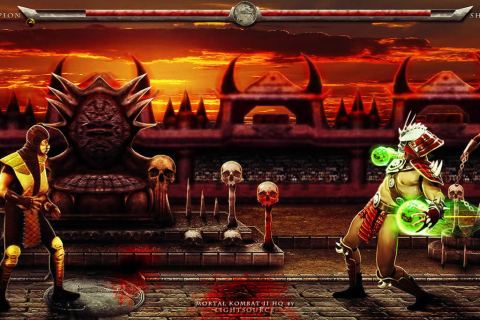
Introduced in 1992, the original ultra-violent franchise ushered gore, phonetically creative spelling, and the word “Fatality!” into the national spotlight, thereby making video games an ethical talking point for Rosary-clutching politicians from then on out.
On the surface, its groundbreaking depiction of digitized actors contrasted sharply with other hand-drawn animations of its time, thus setting the stage for the series’ unflinching shock value.
And while these “realistic” visuals certainly helped creators Ed Boon and John Tobias get the game the attention it demanded, it’s really the series’ cast of ninjas and misfits on top of an innovative fighting system (uppercuts, anyone?) that’s given the franchise its staying power—as attested to by nearly 20 years of shelf life and countless millions generated across 10 different consoles.