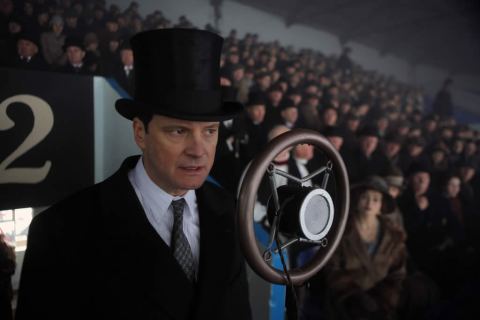
The King's Speech

Colin Firth makes an excellent King George VI — so excellent, in fact, that he earned himself an Oscar nomination for Best Actor. But that doesn’t make The King’s Speech a historically accurate film. As Christopher Hitchens points out in Slate, Winston Churchill was a close friend and supporter of Nazi-sympathizer King Edward VIII (George VI’s brother, who abdicated the throne in order to marry a divorced socialite, leaving George to stutter his way through the monarchy). In the movie, though, Churchill is constantly portrayed as being on George’s side. The filmmakers also fudged the chronology: The King’s Speech gives the impression that George VI and his speech therapist worked together for only a few years in the mid-1930s, when in reality the two began their relationship as early as 1926. Of course, none of that seems to matter to the Academy, which nominated The King’s Speech for a whopping 12 awards.
Shakespeare in Love

Shakespeare in Love, winner of a Best Picture Oscar (over Saving Private Ryan, no less), paints a portrait of William Shakespeare as a playwright hopelessly in love with the star of his latest play. Director John Madden, screenwriter Marc Norman and playwright Tom Stoppard envisioned a world in which the inspiration behind Romeo and Juliet was Shakespeare’s own tumultuous experience with forbidden love. In the film, a young William (Joseph Fiennes) falls in love with Viola de Lesseps (Gwyneth Paltrow), the daughter of a wealthy merchant who is betrothed to another man. Of course, the film never pretended or desired to be rooted in fact. But its liberal use of the life of history’s most famous writer may have misled ill-informed moviegoers into believing that the bard was just a run-of-the-mill, untalented and unsuccessful playwright who got lucky.


