

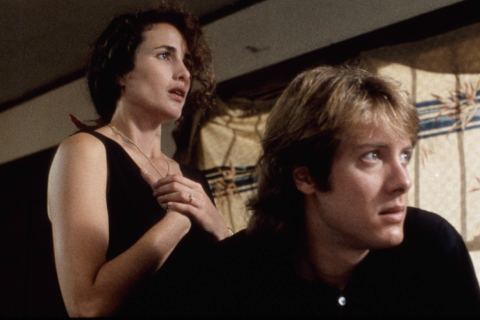
Proposing an ethic for the AIDS era — that talk could be the new sex — this romantic comedy was made for about $1 million in the cinema outback of Baton Rouge, La. Its writer-director, first-timer Steven Soderbergh, said, “I thought the film would seem too European for an American audience and too dialogue heavy to translate in Europe. I figured ten people would go see it four times, and that would be that.” Yet, aided immeasurably by the attractive cast of James Spader, Andie MacDowell, Peter Gallagher and Laura san Giacomo, it won the Audience award at Sundance and the Palme d’Or (top prize) at Cannes, grossed $25 million domestic and launched Soderbergh on a career that alternated mainstream hits (Erin Brockovich, the Ocean’s caper series) with wayward weirdness (Schizopolis, Full Frontal, Che). Headline writers found god in the movie’s title: for a while, everything was “sex, lies and (STDs / in vitro fertilization / Monicagate).”
[youtube=http://www.youtube.com/watch?v=rxdQQpJ9t-4]