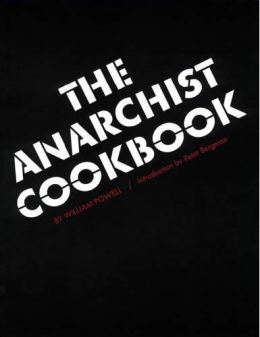
The Anarchist Cookbook

William Powell was just 19 when he wrote this 1971 cult classic. The guerrilla how-to book managed to anger not only government officials, but also anarchist groups. One such organization, CrimethInc., said the book misrepresents anarchist ideals and later released its own book of the same name. Other critics attacked the book for more practical reasons — some of the bombmaking recipes that Powell included turned out to be dangerously inaccurate. Ironically, an older and purportedly wiser Powell later tried to censor his own book. After converting to Christianity, Powell publicly denounced his work, writing in 2000 on Amazon.com that the book is a “misguided product of my adolescent anger at the prospect of being drafted and sent to Vietnam to fight in a war that I did not believe in.” But even Powell couldn’t successfully ban the book from print; he no longer owns the rights.
I Know Why the Caged Bird Sings

This 1970 memoir — the first of Maya Angelou’s five autobiographical works — angered censors for its graphic depiction of racism and sex, especially the passages in which she recounts being raped by her mother’s boyfriend as an 8-year-old child. (In the book, which was later nominated for a National Book Award, Angelou alludes to the Bible, writing, “The act of rape on an 8-year-old body is a matter of the needle giving because the camel can’t. The child gives, because the body can, and the mind of the violator can’t.”) The American Library Association ranked it the fifth most challenged book of the 21st century. The book’s title refers to the 1899 poem by Paul Laurence Dunbar, one of the nation’s first prominent African-American poets. In 1993, Angelou read an original poem at Bill Clinton’s Inauguration, becoming only the second poet in U.S. history to do so after Robert Frost’s 1960 speech for JFK.


