
Tuned In

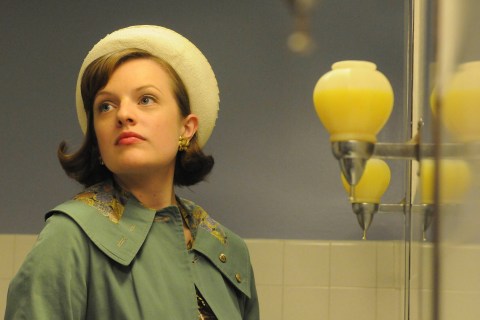
Mad Men Watch: The Boxer

AMC
AMC

SPOILER ALERT: Before you read this post, buy a ticket to the closed-circuit screening at your local theater and watch last night’s Mad Men.

It was structured around one historic fight, and featured a few others—some verbal, one drunken—but all around “The Suitcase” was, fittingly, a knockout.

At the center of all these battles was a conflict, and a connection, between Don and Peggy, two characters who began the series seemingly very different—younger vs. older, male vs. female, boss vs. employee—yet have both bonded and clashed precisely because of the ways in which they are so similar.

This, and not the sexual attachment that Peggy’s mother once suspected (and the rest of the office laughed at), is why he came to visit her in the hospital after she had her baby and advised her to give it up and move on. Don may not be anybody’s idea of a feminist, but he sees Peggy’s ability, he has a sense of what lies ahead of her at each end of this forking path, and the former Dick Whitman knows all about the need to put erase one’s past and create a future. Peggy may be unlike Don in many surface ways, but he knows that her experience is more like his than that of any other person he knows.

As we’ve seen numerous times before, though, this doesn’t make Don a dream boss. He’s helped Peggy to advance farther than most of his male colleagues might, but he’s also tough on her to the point of mockery. Consciously or not, when he’s hard on Peggy, he’s being hard on himself, and at times his treatment of her gets worse in proprtion to his own self-loathing. In “The Suitcase,” their conflict comes to a climax and their bond deepens at the same time, just as Don loses Anna—his last major connection to his old, whole self—and does so in the company of the one person who can understand his experience (even if he’s still hiding much of it from her).

Peggy and Don’s fight, and cathartic all-nighter, begin with a fight over Samsonite that’s really a fight over Glo-Coat, as Peggy accuses Don of taking her idea without giving credit. The beauty of the scene is that in a way each of them is right. Peggy’s idea was in fact a “kernel”—a kid locked in a closet by his mother would have made for a pretty disturbing floor-product commercial—but Don did run with it and allow the world to think the idea sprang full-formed from his head. His first reaction to her complaint sums up how emotionally crippled he can be in dealing with people, as in the fallout with Allison: when Peggy faults him for not thanking her, he snaps, “That’s what the money’s for!” He’s so absorbed in his own drama that he can’t see other people’s problems as being too complicated to solve by cutting a check.

Peggy, on the other hand, is being driven by her own personal conflict, which informs her anger at Don. On the surface, the problem is his making her miss her birthday dinner. On a deeper level, the problem is the birthday itself, and how it brings to the fore other people’s expectations for her as a single woman. (“You know 26 is still very young!” Trudy tells her, in a wonderfully, obliviously hurtful moment.) Peggy’s not interested in giving up her career to be with someone, though she doesn’t want to be alone either.

But beyond her disappointment at losing her romantic dinner with Mark is her greater disappointment at what he’s done with the dinner, having turned it into a surprise party with the very family who has undermined her career ambitions, and whose influence she’s been trying to escape. The incident shows her that, while she may have hoped that Mark is someone she could make a new future with, he’s turned out to be someone trying to drag her back to her past.

Don and Peggy’s resulting night was a spectacular showcase for both Jon Hamm and Elisabeth Moss, and the way their dialogue moved from sniping to full-throated fighting to bonding brilliantly illuminated the special—and not in that way—relationship they have. Don and Peggy don’t fight like a boss and underling, exactly, yet not like lovers, either—as much as he disparages her, you can tell (as when he tries to patch things up over Roger’s memoir tape) that he really wants her approval and good wishes. Peggy, meanwhile, knows she’s still Don’s employee and wants to be his peer, yet already knows that in a way she’s something more—a kind of caretaker, and a kindred spirit in a way she’s never been able to directly acknowledge.

They do directly acknowledge their connection (in their way) in “The Suitcase,” and the script pulls off a difficult job. The two of them end up saying explicitly things that have always been unspoken about their relationship—the office rumors about them, for instance, and the fact that Peggy knows Don better than anyone at the office (and now maybe anywhere). This kind of thing could be forced, but the context—an everything-on-the-table argument followed by a night of drunken talk and brainstorming—makes it natural.

And in a turn that’s elegant and hilarious at once, the night comes to a climax with a figure from both of their pasts, a drunken Duck Phillips. In a way, Duck represents disappointment for both of them. Peggy finds that he’s become a joke, making her a job offer that turns out to be desperate dreaming and writing her off as a whore when she won’t pull him out of his mire; Don ends up the loser in a battle of pathetic drunks—a farcical version of the Clay-Liston fight—saying “Uncle” in his puke-spattered shirt to the man he once so elegantly defeated at business.

Yet in the end, it’s Duck who gets ushered off the stage, and Peggy and Don—rested and freshly changed—who move on the next morning to salvage the Samsonite account, she after ending her relationship with Mark, he after saying goodbye (in a way) to Anna. They may be able to put aside their conflict and handle their suitcase problem at last. But they had to unload some of their baggage first.

Now the hail of bullets:

* Peggy’s breaking up with Mark is in a way as much as anything about breaking away from her family, yet they still have enough hold on her to infuriate her, and I love how Elisabeth Moss makes Peggy’s voice shift back into her old Brooklyn accent—”Hello, Ma”—the second she gets on the phone with her.

* Speaking of ending up on the wrong side of the fight, it’s notable that Don makes a point of trashing both Joe Namath and Cassius Clay / Muhammad Ali in the space of the episode. What we know watching is that both men will become not just legends of their sport but advertising icons as well:

As much as Don is praised as an up-and-comer, we’ve also seen that in many ways he’s a man of the past. Peggy’s Samsonite pitch for Namath, corny as it may have been, would have been ahead of its time. And while Don may have been wrong about Muhammad Ali—both as a boxer and a public figure—he’s not so blinded by his opinions that he can’t see that value of hitching his Samsonite campaign to an image inspired by The Greatest.

* Don’s dismissal of Namath, who hasn’t yet played in the pros, suggests another tension behind his treatment of Peggy: a middle-aged man’s discomfort with youth culture—which his own business, obviously, helps promote—and the notion of younger people getting (what seems like to him) too much too soon. Another idea this Guy Over 30 is goin to have to get used to.

* Dr. Lyle Evans mystery solved! Roger’s reference to Bert Cooper’s unfortunate loss not only clears up one of Google’s greatest conundra, it set out a bit of history between Roger and Bert (Roger believed Bert hated him for his “joie de vivre” and sexual prowess) that I would not be surprised to see come up again.

* And, of course, it also gave us an eye-opening revelation about the secret life of Mrs. Blankenship, who showed up again to deliver a racist zinger about the Clay-Liston fight (“If I wanted to watch two Negroes fight, I’d throw a dollar out my window”). It was good to see the episode, at least, acknowledge her function beyond comic relief: i.e., that Don knows that Joan knows Mrs. Blankenship was “what [he] needed” after his indiscretion with Allison.

* The episode paired Mrs. Blankenship’s casually racist comment with the casually anti-Semitic comments of Harry and his colleagues (“You’re such a Jew”). I wonder whether Harry’s business dealings, and his growing Mr. Hollywood pretensions, will get a closer look sometime this season or whether they’ll remain mainly comic relief.

* Peggy’s conversations with Don turned up another parallel between the two: they both watched their fathers die. And Peggy seemed to get a brief reminder of the horrific scene when Don, after searching on the floor for the mouse, turned his head up red-faced and ill-looking. We know from the beginning of season 2 that Don had blood-pressure issues; you have to wonder what Don’s getting himself into if he keeps drinking away his problems the way he has been.

* The song over the episode’s closing credits was Simon and Garfunkel’s “Bleecker Street.” (“The Boxer” would not only have been too hamhanded but came out years later.) Mad Men has often shied away from using the more obvious big names of the period, but this lesser-played song nicely captured the episode’s themes of sadness and regrets in a fog-shrouded Manhattan.  It’s a long road to Canaan.

Related Topics: Television, Tuned In
  • Latest on Entertainment

    IFC Films

    Kerouac's On the Road Comes to Cannes: Where's the Beat?

    Walter Salles’ film of the Beat Generation classic wastes a strong cast, including Twilight‘s Kristen Stewart, in a needless tribute to ’50s wanderlust

    Surprise! The Lowest-Rated Show in Broadcast History Is Actually GreatSlate

    Adam Rose/FOX

    Glee Watch: NYADA, NYADA, NYADA

    Spoilers for the season finale of Glee below:

    One beef I often have with Glee episodes is that they move too fast, go in too many directions, try to cram in too much at once. You might say that about “Goodbye,” the season 3 finale, but in this case that approach seemed about right. It’s an episode about graduation, and graduation is something that, no matter how much you plan for and anticipate it, still goes too fast. Graduating is something you do, but in the moment it feels like something that happens to you, suddenly and all at once, like going over a waterfall.

  • mjwilstein

    this video of Mad Men in the 70′s, jumping the shark, is hilarious:
    http://bit.ly/bFws6O

  • http://jimfromla.wordpress.com jimfromla

    Up ’till now Mad Men has been very accurate with timeline details. I think they got it wrong with the Clay/Ali photo (or they compressed multiple events). The stunning photo of Ali pumping his fist and yelling at Liston to get up was a knock out from the rematch. By then he was just Muhammad Ali. The first victory over Champ Liston was a TKO after round 6. Liston couldn’t leave his corner, and (still going by the name) Clay was documented as jumping into the arms of his trained with both gloves high in the air.

    Also, did I hear the name of “Jersey’ Joe Walcott in the radio broadcast?

    Sloppy? Or was the urge to use the famous photo too much to pass for true accuracy. It was confusing to someone who grew up in a family of boxers.

  • http://twitter.com/poniewozik James Poniewozik

    I’m the furthest thing from a boxing fan, but unless I’m mistaken or misreading you, the May 25, 1965 fight *was* the rematch:

    http://en.wikipedia.org/wiki/Muhammad_Ali_vs._Sonny_Liston#Ali.2FListon_II

  • tracht47

    My only quibble with this episode was that they didn’t mention that the Ali/Liston fight in 1965 was the rematch. Ali was already the champion. The fact that he was referred to as Cassius Clay was not unusual. It took years for the press and the public to accept the fact that he wanted to be called Muhammad Ali. One notable exception was Howard Cossell.

  • http://jimfromla.wordpress.com jimfromla

    Wow, you really do monitor the comments.

    Your comment being true, I find the SCDP attitude toward Ali as weird then. He already beat Liston. He was the Champ with an Olympic Gold Medal to boot. Quite a bit of racism toward the mouthy negro. Didn’t know his place like Bear Liston. I guess this works in symmetry with the negros fighting over a dollar.

    You should read my dads’ old Ring Magazines from the 60′s. The writers couldn’t even bring themselves around to call him by his name, Muhammad Ali! The name he had when he pumped his fist at Liston. From the Ali – Liston fight.

    I just find the shock of Ali defeating Liston for the second time as hardly historic. That was the first fight. What was historic was the photo. As a kid I used to stare at that image, just like the Iwo Jima flag raising and other classics from the past.

    What was up with the Walcott reference? Undercard fight?

  • meeyai

    Walcott was the referee.

  • beachboyz52

    I was also confused by MM’s treatment of the Clay-Liston fight. The office attitude seemed to reflect the pre-fight#1 public opinion, but the date and the Lewiston, Maine reference clearly sets the stage around it as fight#2. At least an oblique reference to fight#1 as an unexpected upset or something would have helped. Cannot quarrel too much with the script as Liston was still a 7-5 favorite even for the rematch and “Clay” was still his more familiar name at that time. By the way, Jersey Joe Walcott was the referee for fight#2, and his mishandling of the “phantom knockout” count added to the confusion around the outcome of fight#2.

  • beerbaron

    Did anyone else think Don’s “The Champ” ad was kind of lame? Peggy poked a lot of holes in the idea, and her original pitch with Joe Namath seemed a little hacky but was probably better suited to television. Don thinks endorsements are lazy, but isn’t that because it puts the focus on the pitchman, not the adman? I’m starting to wonder if, like Sonny Liston, Don’s past his prime but doesn’t realize it yet.

    I’m hoping we get a Harry Crane episode before the season’s out, maybe even a trip to Hollywood. Get Peggy out there too so she can experience an airplane ride. Trudy’s remark about being 26 had to hurt a lot more than it would today — I think the average age for a woman’s marriage in 1965 had to be around 21 or 22, so 26 is practically spinster-like. It does seem like Trudy and the new receptionist Meghan look up to Peggy in a way, even if she isn’t the object of male attention that they are.

    Also I happened to catch an old Excedrin commercial the other day with none other than a young Elisabeth Moss making a very convincing pitch. I mean I almost believed for a second that she had really bad migraines that Excedrin cured in half an hour.

  • rosseau

    And here is the submission epsiode for Best Drama, Actor, Supporting Actress (or Actress) and Writing for next year’s Emmys. If the show doesn’t repeat Best Drama next year, that will truly be shocking.

    This year has done an outstanding job balancing the comic with the tragic. They’ve had to go funny, because they’ve gone very dark. This episode was the best example yet. Peggy’s and Don’s fight was comic (at least to me)–my funniest line of the night was “That’s what the money’s for!”–but it ended with the hearbreaking crying. Then the Duck-Don fight was both comic and pathetic. You’re thinking, poor Peggy, caught between two drunk losers. But the outcome became sort of cathartic, at least for Don, and I was hoping he would catch Peggy by the elevator and tell her everything. I think he will and probably she will understand. What would be a true jump the shark moment is if Weiner goes insane and has both of them in a romantic relationship with each other.

    Though this season feels like the How I Met Your Mother part with Don’s love life and the no-reason-not to-be-true prophecy that he will get married in a year. It could be the oracle–Dr. Faye–but now it could also be his fake niece. Whoever it turns out to be, I don’t think it will be good. I think Don is destined to die alone, with his good friend Peggy by his side, but without a partner.

  • lobstershift

    Roger, ice clinking in his glass and trying to come up with some meat for his book, drunkenly decided to have fun, with himself and, probably, to startle his secretary Caroline when she transcribed his tape — and he just riffed on silly fantasies about Bert and Mrs. Blankenship. These were was things that “didn’t happen,” rather than events that “actually happened.”

    He probably also scribbled “For a good time, call Caroline” on the men’s room wall.

    It is hard to believe that anyone is taking these jokes as real events. Peggy and Don seemed more flabbergasted at his ingenuity than actually taking his tape as gospel.

  • hpuphd

    It’s only the shows meticulous attention to detail that makes me ask this–but . . . when Don drops the reminder note from Mrs. Blankenship to call Stephanie, the insert as he picks it up shows the area code and California phone number with no named exchanges (all numbers, in other words). At what time in the Sixties did phone numbers go from something like HUdson 1-3399 or FLanders 2-3487 to all numeric? Is there an anachronism here the show missed? After all, a popular movie from just a few years before the time of this episode was BUtterfield 8.

  • beerbaron

    Unfortunately for both you and Bert Cooper’s balls, I think that stuff actually happened. Roger’s mention of Dr. Lyle Evans before the meeting with the Honda salesmen makes sense now, because Bert would be as unwilling to do business with Dr. Evans as Roger was with the Japanese. Sort of fits with Cooper’s character, too. Ever since the merger he’s felt neutered and useless at his own company.

    Roger probably doesn’t intend for that stuff to go actually go in his memoirs, he was just drunk and felt like settling an old grudge against Cooper.

  • tifflovestv

    It was one of the best episodes of Mad Men ever. I love that they addressed Peggy’s baby, and that she probably does know him better than anyone else. There were so many beautiful moments. Very well done.

  • derdav20

    Thanks, enjoyed this. Although in the bullet section, my interpretation of the moment when Don is on the floor looking for the mouse and ill looking was alarm that the ringing phone might have been California calling, and relief when it was Peggy’s phone… though I agree he did not look all that healthy either!

  • thehoobie

    So many people have said so many better things about this amazing episode than I could, but I’d just like to add that I appreciated that (at least according to the sound design) when Don threw up, he really THREW. UP. Extensively. Like an actual person with a bellyful of booze and cheap Greek food would.

    I can’t count how many shows depict the queasy person running or staggering to a bathroom stall, whereupon they emit one dainty cough, but we’re supposed to think they’re horribly compromised (sadly, I’m looking at you, Rubicon). Like so many things in this episode, Don’s comprehensive yakking was both awful and hilarious—and all the more awful for being hilarious….

    I also liked Don’s response to the presence of the “dog” in the Acropolis—it’s not to move to a cleaner place, but to a darker one. There still might be vermin there, but at least they’ll be harder to see.

  • ayatollahk

    All-digit dialing came to different places at slightly different times, but I think it took over in NYC in 1962.

    On his January 1963 album “My Son, the Celebrity”, Allan Sherman did a song entitled “The Let’s All Call Up A.&T And Protest To The President March”, which was a comical protest against all-digit dialing.

    Here are the lyrics:
    http://tinyurl.com/33uspz3

    Two years later, by the time of the second Clay-Liston fight in 1965, all-digit dialing had completely won out. So there isn’t an anachronism here, but thanks for bringing it up.

  • midnightconfessions

    The telephone number system that used two (or three) letters followed by numerals was gradually phased out, beginning in the early 1960s. See North American Numbering Plan, Wikipedia.

    Last night’s episode was phenomenal, although I don’t think I’ll ever be able to look at Duck the same way again. The uh, “flatulence” that preceeded his attempt to leave a special gift for Don (in Roger’s office) was a spontaneous eruption, so to speak. The episode deserves an Emmy as well as a special “Bodily Functions Extraordinaire” award.

  • arapaho415

    I was a girl about Sally’s age in 1965, and I recall that things like phone number prefixes (HIckory for me) were phased out as zip codes and interstate highway numbers were adopted during that decade. I see that commenter midnightconfessions has already referred to the Wikipedia article I was just reading about this matter.

    I think everyone’s aware of the magnitude & the speed of 1960s trend changes (flattops for boys/sweater sets & tiny hair ribbons for girls at the beginning of the decade to unisex long hair, jeans & patchouli by the end of the decade). Kudos to the Mad Men team for getting the timing & detail right for all the myriad of props & cultural references used on this show.

    The Rolling Stones’ “Satisfaction” is about to get extensive airplay now (mid-June 1965-I remember someone playing it on the last day of school from a radio on a school, bus). Now on to Twiggy, Carnaby Street & Hullaboo!

blog comments powered by Disqus