

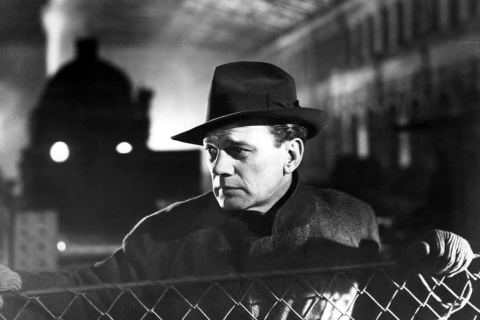
Cannes had an irregular early history. The inaugural festival was to begin on Sept. 1, 1939 — the day Germany invaded Poland. Things didn’t truly get started until 1946, when the jury awarded the top prize to 11 of the 13 films in competition. (Alfred Hitchcock’s Notorious was one of the two losers.) The festival awarded no prizes in 1947 and didn’t take place the following year, so 1949 was the first year Cannes crowned an undisputed winner. The judges’ choice was ideal: The Third Man. Graham Greene’s murder mystery, set in postwar Vienna, was directed by an Englishman (Carol Reed), photographed by an Australian (Robert Krasker) and produced by a Hungarian (Alexander Korda), with a pan-European cast and two hallowed Americans, Orson Welles and Joseph Cotten. For an international festival on the rise, here was a truly international film that was both timely and classic.
[youtube=http://www.youtube.com/watch?v=M7d9VpSdGhA]