
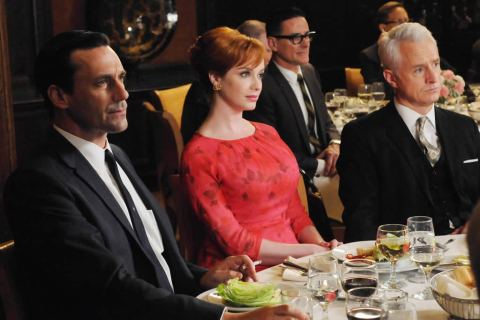
Mad Men

Nostalgia, Don Draper once pointed out in one of his classic sales pitches, means the pain from an old wound. This minutely observed 1960s drama avoided the clichés of historical nostalgia by focusing first on its characters, their own history and their aches. Central among them was Don, who ran from his impoverished childhood, stole a dead man’s identity and became not just a suburban dad but an American archetype of self-reinvention. Set amid the high life and highballs of swellegant Madison Avenue, Mad Men showed how people in the business of creating perceptions come to terms with reality.
Deadwood

A teeming Shakespearean epic of gold and mud, Deadwood used a South Dakota gold rush as a microcosm of the creation of civilization. This brutal and poetic Western was not just about imposing law on lawlessness and civilization on wilderness. It was about the free-for-all in which powerful interests sought to shape the law, and the still-forming territory, to their advantage — while less powerful men (and a few women) scrambled to find their place. David Milch created a language of elegant force and, in Al Swearengen (Ian McShane), a singularly memorable antihero trying to carve out his piece (and carrying a knife fitted to the task).


