

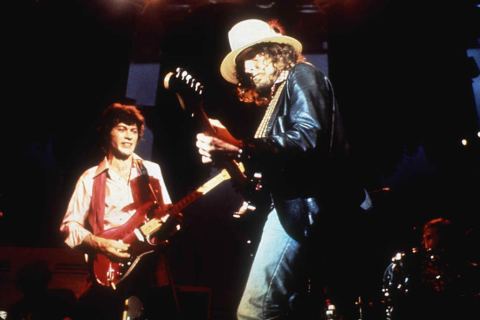
If you’re going to make a concert film, you might as well do it right. To document their farewell concert on Thanksgiving Day in 1976, the Band secured the services of one of cinema’s most important auteurs: Martin Scorsese. Fresh off his breakthrough films Mean Streets and Taxi Driver, Scorsese got involved with this project precisely because of Mean Streets, as the Band’s guitarist-songwriter Robbie Robertson approached the director after hearing that film’s stirring score. The Band, which had been performing since 1960, most notably as the backup group to Bob Dylan, held their final concert at Winterland Ballroom in San Francisco. It was one for the ages, bringing the likes of — deep breath required — Joni Mitchell, Neil Young, Muddy Waters, Eric Clapton, Neil Diamond, Emmylou Harris, Van Morrison, Ron Wood and Ringo Starr onstage for the send-off, with Dylan himself making a late appearance. The show, professionally lit and filmed in 35 mm (apparently a first for concert films), captured all the subtle nuances of a talented group taking its final curtain call after 16 years on the road.
TIME’s take: “The Last Waltz is a rock-concert movie — no more, no less — that could be the best such film ever made.”
[youtube=http://www.youtube.com/watch?v=5rKlkR0B5aw]