

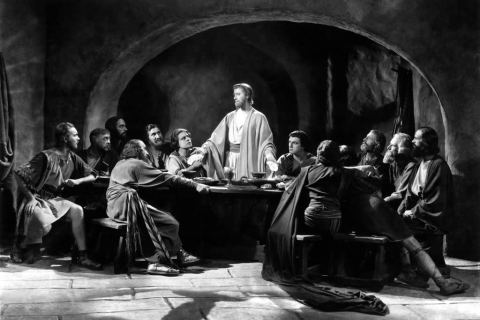
Cecil B. De Mille, a preacher’s son with some Jewish ancestry, had scored a titanic hit with The Ten Commandments in 1923 — at the time, the top-grossing film after “The Birth of a Nation.” Four years later, the extravagant auteur went from Old to New Testament. The King of Kings was another hit, thanks to De Mille’s showmanship and expert marketing, and a color sequence for Easter Sunday with Jesus surrounded by enough doves for a John Woo movie. According to historian Carlos Clarens (using the pseudonym John Cary in the book Spectacular! The Story of Epic Films) De Mille insisted that “during production, the actors portraying Christ and the apostles refrain from drinking, gambling, cussing, night-clubbing and even having intercourse with their wives.”
H.B. Warner’s Jesus is in the gaunt El Greco mode; the scenes are essentially brisk illustrations of the Gospels. Nearly all the dialogue and narrative intertitles are from the Gospels. The exceptions: a few that mitigate supposed Jewish guilt for Jesus’ death. Magdalene: “The High Priest speaketh not for the people.” And a Pharisee, at the end: “Lord God Jehovah, visit not Thy wrath on Thy people Israel — I alone am guilty.”
[youtube=http://www.youtube.com/watch?v=pFhcdF_td10]