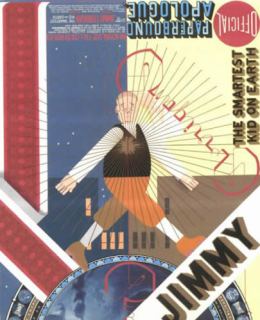
Jimmy Corrigan, the Smartest Kid on Earth

In precise, almost jewel-like panels arranged in flow-charts and Mondrian-like grids, Chris Ware tells the story (does it count as a story, when there’s no hope whatsoever?) of a solitary, withdrawn man in his thirties who meets his father for the first time. The bleakness of Jimmy’s life is only relieved by his fantasies about his adventures as the Smartest Kid on Earth, which unfortunately also tend to end in … bleakness. Every page in Jimmy Corriganis a master class in minimalist graphic design, that slices time into discrete, intensely felt moments in a way that no other medium can.
Maus

Art Spiegelman’s father Vladek was a Polish Jew who survived the Holocaust. When Spiegelman told his father’s story in Maus, he depicted all the Jews as mice and all the Nazis as cats. Strangely, the cartoonish conceit doesn’t trivialize the story, it makes it viscerally real — it strips away our practiced indifference to an all too familiar story. Those mice are more human than most people. Alongside his father’s tale Spiegelman lovingly but honestly depicts his own relationship with his father, who has aged into a difficult, prickly, fearful man. Maus won a Pulitzer in 1992, a landmark event in the history of the medium — its sheer power forced the mainstream world to take comics seriously.


