Coosje van Bruggen: 1942-2009

Attilio Maranzano
Batcolumn, Claes Oldenburg and Koosje van Bruggen, 1977/ Photo: Attilio Maranzano
24_sc-149_284_f.jpg
Kelsey McNeal/FOX
One of the more interesting bits of strike fallout news: 24 co-creator Joel Surnow is leaving the show to develop new projects. Surnow, students of 24 know, is a rare Hollywood conservative, and the chief point of ire for critics who say the show is a shill for a hard-right, torture-em-all-let-God-sort-em-out view of the War on Terror. This leaves the show in the hands of Howard Gordon, Surnow's erstwhile partner on the show, and a not-so-rare Hollywood Democrat. I've generally been of the belief that 24 gives equal opportunity to right-wing and left-wing paranoia alike: for every terrorist-protecting ACLU lawyer there's a dirty oil executive trying to gin up a phony war. And I think that's not because of anyone's politics but because it makes good, ridiculous entertainment. But let's say for the sake of argument that Gordon has been the Colmes to Surnow's Hannity. How could this shakeup shift the balance of 24's politics? Season 7: A mysterious virus has been released, killing Americans by the thousands. Jack Bauer must trace the disease to its source: a pharmaceutical company offering the government a secret deal to end the plague--but only if it abandons its plan for universal health care! Bauer foils the virus outbreak by securing government funding for embryonic stem-cell research in TV's most thrilling 24-hour lobbying campaign ever. Season 8: Bauer races across the Los Angeles area to foil a series of attacks on abortion clinics, while also advocating better sex education and the responsible use of contraception. "Damn it, Chloe, you need to use protection! Abortion should be safe, legal--and rare!" Season 9: Production suspended to conserve energy. Seasons 10-14: Because torturing suspects is counterproductive and yields false confessions in the real world, Bauer patiently but humanely interrogates a suspect connected to a planned suitcase-nuke attack against the United States. The questioning takes 120 hours and five TV seasons, including mandated meal breaks and eight-hour sleep periods (scheduled during non-sweeps months). But it pays off in the dramatic finale, when it turns out there was no nuclear plot to begin with, and Bauer's rational handling of the situation and respect for international conventions of due process moderately enhances America's standing in the Muslim world.

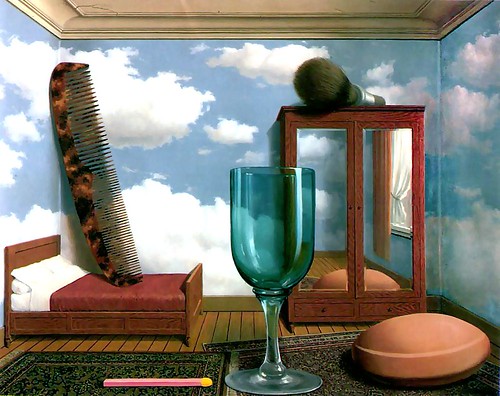
Over the weekend Coosje van Bruggen, Claes Oldenburg’s wife and collaborator, died at their home in L.A. Van Bruggen was a Dutch born art historian and a curator at the Stedelijk Museum in Amsterdam when she met Oldenburg in 1970. At the time Oldenburg was just beginning his transition from his oversize soft sculptures of the 60s to monumental fabricated steel pieces that could survive outside. Oldenburg’s work had drawn on the Surrealist idea — Magritte used it all the time — that a change in the scale of an object gave it a strange power. At first he applied that insight to most ordinary items of American life, especially humble edibles, all those cheeseburgers and ice cream cones and pillowy wedges of pie, made even more dream like because they were rendered in soft materials, with their inevitable hint of the pliancy of the human body, and splattered with mock-Abstract Expressionist drizzles of paint.
When he met Van Bruggen, Oldenburg was working on one of the first big outdoor steel versions of his basic idea, in this case a giant gardening tool called Trowel 1. In its original version, which Oldenburg installed at an outdoor sculpture show in the Netherlands in 1971, the piece was a metallic silver gray. Van Bruggen thought the gray made it look too much like a serving utensil. She persuaded Oldenburg to paint it the blue of Dutch workmen’s overalls. In 1976 a blue version was unveiled in the sculpture garden of the Kroller-Muller Museum in Otterloo — just pretend I typed in a couple of umlauts there over the “o” and “u” in Kroller-Muller — and the Oldenburg-Van Bruggen team was born. One year later they were married.

Together Oldenburg and Van Bruggen produced three decades of monumental sculpture that Van Bruggen would call The Large-Scale Projects. Basically, they monumentalized Pop, an idea we’re all familiar with now. We’re so familiar with it — it goes without saying that Jeff Koons’ shiny steel balloon dogs and heart pendants are just a riff on the Oldenburg/van Bruggen brand — that it’s hard to remember that the early works had a really bracing brilliance to them. The great Batcolumn in Chicago, from 1977, is both a very funny parody of monumental sculpture — it’s a giant baseball bat — and a brilliantly plausible quasi-Minimalist steel abstraction.

I don’t know whether, after Van Bruggen’s death, Oldenburg will choose to return to working on his own. (He turns 80 at the end of this month.) But they’ve already left a long line of monuments to their own wit.

Related Topics: Looking Around
  • Latest on Entertainment

    Jordin Althaus/AMC

    Mad Men Character Study: Sympathy for Betty

    Sue me, but I like Betty Draper/Francis as a character. The problem is that Mad Men doesn’t. Betty’s not the worst character on the show, but she’s probably the worst-served.

    The Boom in Hollywood ImplosionsSlate

    Gods without men the sugar frosted nutsack bringing up the bodies

    The Year in Novels So Far; Plus, Hilary Mantel!

    Though it’s only May, I’ve already read enough novels I love to fill up most of my top 10 list for 2012—including Bring Up the Bodies

  • http://www.drasties.com/?p=5355 Drasties – Dutch on the World – World on the Dutch

    [...] Coosje van Bruggen: 1942-2009  [...]

  • http://weekfiftytwo.wordpress.com/2009/01/13/coosje-van-bruggen-1942-2009/ Coosje van Bruggen: 1942-2009 « Week Fifty Two

    [...] weekend, Coosje can Bruggen, Klaus Oldenberg’s wife and collaborator, died. Read about it in TIME magazine. Below, find a selection of images from her and Oldenberg’s life’s [...]

blog comments powered by Disqus