

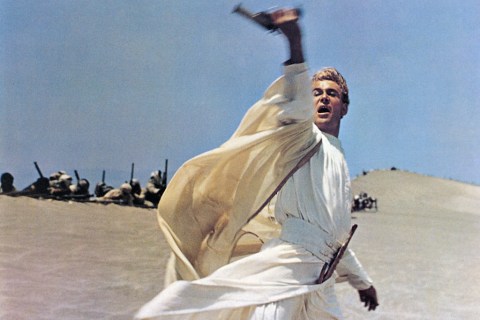
After a certain point, British director David Lean just stopped doing small movies. In between Bridge on the River Kwai and Doctor Zhivago he delivered this most epic of epics. The tale of T.E. Lawrence — British author, adventurer, and soldier — Lawrence is a sweeping portrait of the kind Hollywood rarely makes anymore. In his film debut — one of the most auspicious in movie history — Peter O’Toole delivers a vain, intelligent, passionate performance, appropriate for a Englishman who thought he could bring freedom and cohesion to long-warring Arab tribes. Full of overwhelming desert cinematography, Lawrence was made for the big screen. Watching it at home and watching it in a proper cinema give the impression of two vastly different films.
[youtube=http://www.youtube.com/v/IDF0at7sC0M&hl=en&fs=1]