

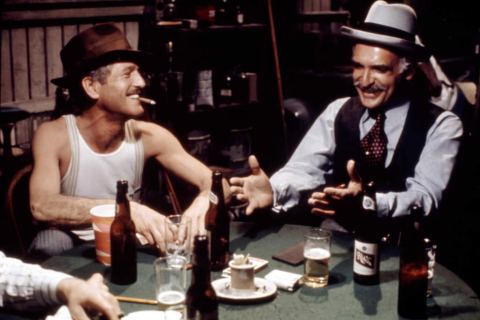
Another Newman-Redford jape. This time the con men are in Depression-era Chicago, inexplicably motoring to Scott Joplin rags of an earlier time and another city. Midst much bustling, they pull scam after scam over the eyes of the cops, rival gangsters and most of a large, delighted audience. Redford played it younger and more winsome, while Newman looked comfortable being cast as a relative elder statesman of mendacity.
The film is genial enough: breezy, cleverly written, lavishly mounted; in fact, overproduced. That The Sting won the Oscar for Best Picture, sandwiched between the two Godfather films — and in the year of Mean Streets, Badlands, American Graffiti, The Exorcist, Serpico, Paper Moon and a couple of Robert Altman films, not to mention Bertolucci’s Last Tango in Paris, Bergman’s Cries and Whispers and Truffaut’s Day for Night — was old Hollywood’s signal that it would surrender to the ornery new generation only after a rear-guard fight and this royal nose-thumbing. The Oscar was also an implicit tribute to Newman’s undiminished box office luster, which he would trump the following year with the disaster film The Towering Inferno, where he traded in Redford as a partner in charisma for Steve McQueen.
[youtube=http://www.youtube.com/watch?v=isr-QP-18j8]