The Blood of Jesus

Spencer Williams, Jr. was the only black director who received frequent commissions from white moguls to make films during the race movie era. Williams was a big, boisterous actor-singer best known for playing Andy Brown in the early-50s TV series Amos ‘n’ Andy. In early-talkies Hollywood he had worked as an actor, a sound technician and a screenwriter on low-budget or indie films. In 1940 he was hired by Dallas exhibitor Al Sack to write and direct films, apparently with a minimum of front-office interference. He made nine or ten of them: oddball melodramas (Girl in Room 20), low-octane jive musicals (Dirty Gertie from Harlem U.S.A., Juke Joint) and a trio of religious epics: The Blood of Jesus, Go Down, Death and Of One Blood.
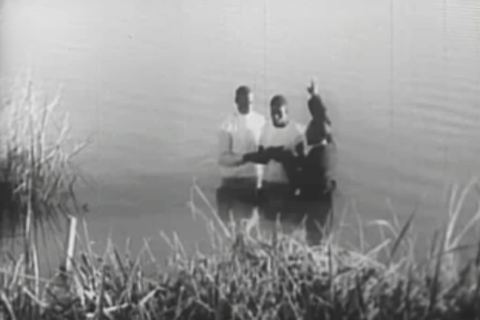
The first of these, 1941′s The Blood of Jesus, has a naive grandeur to match its subject. A morality play about an angel and a devil fighting for a woman’s soul, it begins with a baptism and ends in bloody death near a cross — all scored to rousing gospel music. Told in a spare style with no hokum, the movie has the feeling of an honest, unmediated religious experience. For decades, this and other Williams films were thought lost, but in the mid-80s prints were discovered in a Tyler, Texas warehouse. And so 50 years after its making, Jesus was selected for inclusion in the Library of Congress’ National Registry of Films.
The Jackie Robinson Story

The movies have often tried to immortalize black athletes, from Coley Wallace’s portrayal of Joe Louis in 1953 to Will Smith’s Muhammad Ali in 2001. But a couple of times in the race-movie years, the stars played film-friendly versions of themselves. Henry Armstrong, the only boxer in history to hold three titles simultaneously (featherweight, lightweight and middleweight), headlined 1939′s Keep Punching. And Robinson, the first Negro to be allowed to play major league baseball in the 20th century, reprised his saga on screen.
The Jackie Robinson Story was made in the winter of 1949-50, just after Robinson won the National League batting title and was named Most Valuable Player. The movie was directed by Alfred E. Green, an early-talkies veteran who helmed one of the biggest hits of the 40s, The Jolson Story, with Larry Parks as the Jewish showman who performed in blackface. Robinson needed quiet fortitude to endure the racist taunts of fans and rival players, and that soft-spoken steel is evident in the film. His wife Rae is played by the young Ruby Dee, a mere 58 years before she won her first Oscar nomination as Denzel Washington’s mother in American Gangster.
Hollywood on Race
- About the List...
- Body and Soul
- Hallelujah!
- Judge Priest
- Imitation of Life
- God's Step Children
- The Duke Is Tops
- Gone With the Wind
- The Blood of Jesus
- The Jackie Robinson Story
- Native Son
- Carmen Jones
- The Defiant Ones
- In the Heat of the Night
- Sweet Sweetback's Baad Asssss Song
- Lady Sings the Blues
- Cooley High
- Killer of Sheep
- Richard Pryor Live in Concert
- A Soldier's Story
- Do the Right Thing
- Boyz N the Hood
- Eve's Bayou
- Bamboozled
- Madea's Family Reunion
- I Am Legend


