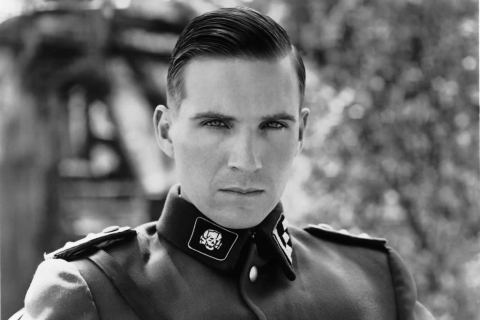
The role of Goeth, commandant of the Plaszow death camp in Steven Spielberg’s Oscar-winning film, seems to allow for little subtlety; the man shoots Jews for target practice. But now this capricious monster strides into the basement of his barracks mansion and sees his maid, the lovely Jewish internee Helen Hirsch (Embeth Davidtz). Though he had chosen her as window dressing for the mausoleum he runs, her strength and grace have touched him. For a crucial moment, as we see on Fiennes’ face, evil pauses to consider itself. Could I have a decent feeling? Could I love this base creature, this beautiful thing, this Jewess? Just as quickly, and subtly, Fiennes’ face tells us no. Goeth’s fists flail out, not so much at Hirsch as at the recognition that he is doomed to solitude by his wickedness.
In the generation since Superfly and Sweet Sweetback, the Afro gangster rose in the movie hierarchy. By the time of Quentin Tarantino’s breakthrough crime epic, he has become a Mob boss with gravitas, dispensing a lot of hurt — and taking quite a bit too. At first, Marsellus is the bete noir who sends one of his lieutenants (John Travolta) on the delicate errand of giving his young wife (Uma Thurman) a fun night out. He’s front and center in the second episode, when he orders the death of a boxer (Bruce Willis), then is ravaged by a pair of deranged hillbillies. Willis saves the big man’s life, then asks him if he’s OK. Marsellus’ immortal reply: “Naw, man. I’m pretty f—in’ far from OK.” His other great line, to the surviving sodomist: “I’m-a get medieval on your ass”
In light of the Material Girl performing at Super Bowl XLVI, TIME takes a look at her life and career, both of which have been lived firmly in the public eye.