

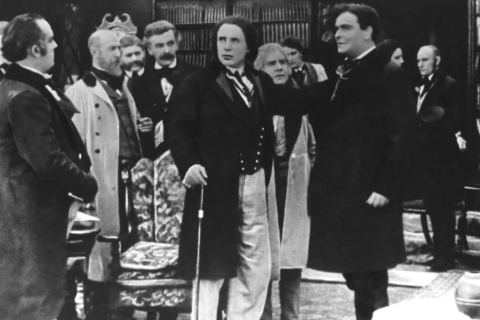
The first great feature film — the one that synthesized the cinematic language and was the top-grossing movie for decades, until another Civil War drama, Gone With the Wind, surpassed it — is also in parts a vilely racist enterprise. D.W. Griffith painted his Negroes and mulattos (literally, since most of the actors were whites in blackface) as stupid, brutal, lecherous and duplicitous. The film portrays blacks as savages who lusted after white women, were enfranchised through voter fraud and turned the state legislatures into pig sties. The only recourse for honorable white men was to form the Ku Klux Klan! Lynch is a mulatto in cahoots with an abolitionist; it is he who orders a crackdown on the Klan and gets what Griffith sees as a villain’s just deserts. That this landmark film should be so rich in black dastards is a shame that still haunts the screen.
[youtube=http://www.youtube.com/watch?v=a9UPOkIpR0A]