The album may be dead, but it's certainly not forgotten. TIME's critics have chosen the 100 greatest and most influential musical compilations since 1954.
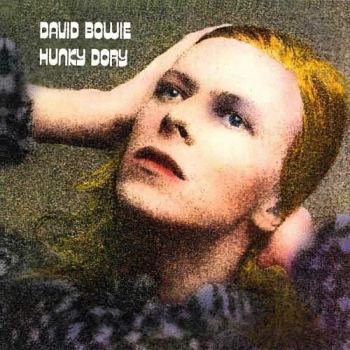
At a moment when no one knew whether David Bowie was a transvestite, provocateur, folk singer or space alien, the then 24-year-old released an album that slyly capitalized on the confusion. “Life on Mars?” placed him in deep space, while a trilogy to his idols (“Andy Warhol,” “Song for Bob Dylan” and “Queen Bitch” — for Lou Reed) clarified his earthbound ambition to be a boho poet with prodigal style. Changes, meanwhile, proved he could write a great pop song about who really (maybe) was.
Because Smith was a poet before she was a singer… and John Cale of the Velvet Underground produced… and her lover Robert Mapplethorpe took the cover photo, Horses is often praised for fusing classical verse, feminism, punk and the avant-garde—which makes this epic debut sound like it belongs on a syllabus for a class few people would willingly take. In fact, it’s a rock record of overwhelming power. For all her poetic skill, the album’s most memorable words are its first: “Jesus died for somebody’s sins, but not mine.” From there, Smith’s voice—like a match dragging across the side of a matchbox just before it ignites—and unrelenting band (guitarist Lenny Kaye, pianist Richard Sohl, drummer Jay Dee Daugherty and bassist Ivan Kral) swagger through a complete reinvention of Van Morrison’s Gloria and several nine minute volcanoes that feel far more romantic and revolutionary than any mere poetry.
Sue me, but I like Betty Draper/Francis as a character. The problem is that Mad Men doesn’t. Betty’s not the worst character on the show, but she’s probably the worst-served.