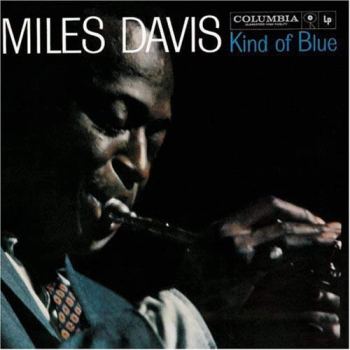
The album may be dead, but it's certainly not forgotten. TIME's critics have chosen the 100 greatest and most influential musical compilations since 1954.
In 1959, Miles Davis had already remade jazz in his own image several times over. The Birth of Cool introduced a smooth, sophisticated approach, and then Walkin’ heated things up again. His classic ’50s quintet raised the bar for small-group improvisation. But when he assembled an unprecedented all-star team (featuring John Coltrane and Cannonball Adderley on tenor and alto saxophones, and the masterful pianist Bill Evans) for the two-day sessions that became the Kind of Blue album, Miles left his most lasting mark. The open-ended songs, barely sketched out around “modes,” or scales, rather than chord changes, were given just one or two takes — and the glorious results, the best-selling jazz disc of all time, are simultaneously delicate and powerful, and teeming with life.
It doesn’t get any more rock & roll than this. Richard Penniman already had six hits on the charts, starting with the cataclysmic “Tutti Frutti,” before his label decided to gather them up on a long player. The results are glorious anarchy, let loose by a crack team of New Orleans musicians with the most distinctive, most outrageous voice of them all leading the charge. Just look at the songs he was banging out so rapid-fire: “Long Tall Sally,” “Rip It Up,” “Slippin’ and Slidin’” — Here’s Little Richard is twenty-eight minutes of gleeful mayhem. From Paul McCartney to Prince to Axl Rose, the legacy of Little Richard has never waned, no matter how many insurance ads he does.
TIME remembers the legacy of Don Cornelius by looking back at the TV shows that brought — and still bring — a rich trove of music into the living rooms of America
In light of the Material Girl performing at Super Bowl XLVI, TIME takes a look at her life and career, both of which have been lived firmly in the public eye.