

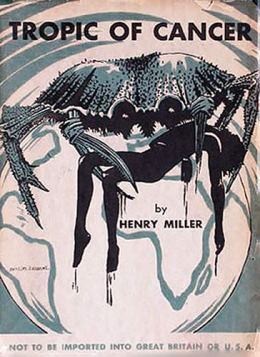
“This is not a book, in the ordinary sense of the word. No, this is a prolonged insult, a gob of spit in the face of Art, a kick in the pants to God, Man, Destiny, Time, Love, Beauty…” That was Miller. In other words, it’s a bum’s manifesto, the greatest imaginable. Miller discourses on his life and lowlife in Paris, fashioning his experiences, reflections, orgasms and philosophizing into a shambling narrative. It’s impossible to outdo George Orwell’s wonderfully overstated appraisal of Miller in 1940 —”the only imaginative prose writer of the slightest value who has appeared among the English-speaking races in some time”—but it’s hard not to agree. He’s the thinking man’s slacker, but his prose is a force multiplier—lucid, honest and unhampered by neurotic self-loathing. Tropic of Cancer was not published in the U.S. until 1961, where it set off an obscenity trial that is still one of the great episodes in the history of free speech. Before Kerouac, before Burroughs, Miller disputed all the imperatives of capitalism. He stood before the temple of money and raised the flag of happiness. You have a problem with that?