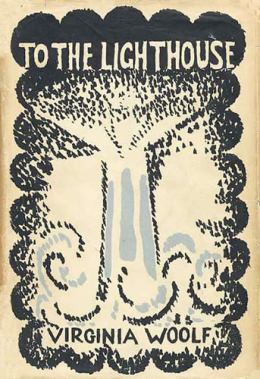
After Woolf published her breakthrough novel Mrs. Dalloway, she raised the stakes and broadened her focus. To the Lighthouse is a stately dance of time, hope and art, as performed by the Ramsay family and their immediate friends as they vacation at a house in the Hebrides. Mrs. Ramsay is a housewife and hostess; her husband is a cold, analytical philosopher; drawn in their wake are, among others, a struggling young painter named Lily Briscoe and their little son James, whose dearest wish is to take a boat ride to a nearby lighthouse. The novel begins as a poignant portrait of family dynamics, but Woolf sets the second half of the book a decade after the first, and that allows her to turn To the Lighthouse into a study of the damage that time and history inflict on the Ramsays’ hopes and dreams, and a celebration of what endures.
“This is not a book, in the ordinary sense of the word. No, this is a prolonged insult, a gob of spit in the face of Art, a kick in the pants to God, Man, Destiny, Time, Love, Beauty…” That was Miller. In other words, it’s a bum’s manifesto, the greatest imaginable. Miller discourses on his life and lowlife in Paris, fashioning his experiences, reflections, orgasms and philosophizing into a shambling narrative. It’s impossible to outdo George Orwell’s wonderfully overstated appraisal of Miller in 1940 —”the only imaginative prose writer of the slightest value who has appeared among the English-speaking races in some time”—but it’s hard not to agree. He’s the thinking man’s slacker, but his prose is a force multiplier—lucid, honest and unhampered by neurotic self-loathing. Tropic of Cancer was not published in the U.S. until 1961, where it set off an obscenity trial that is still one of the great episodes in the history of free speech. Before Kerouac, before Burroughs, Miller disputed all the imperatives of capitalism. He stood before the temple of money and raised the flag of happiness. You have a problem with that?
The Foo Fighters captured five Grammys and Adele won four, including the song of the year trophy for “Rolling in the Deep,” at a Grammy ceremony that had the difficult task of celebrating music’s best while mourning the loss of one of their greatest, Whitney Houston.
From Nicki Minaj’s Red Riding Hood getup to Katy Perry’s head-to-toe blue ensemble, TIME rounds up some of the best (and worst!) sartorial choices at the annual music awards show.