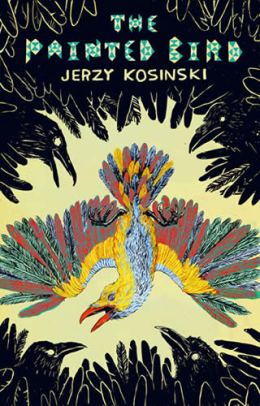
The onset of World War II cuts a young Jewish boy off from his family and sets him adrift among the peasants of rural Poland. There, wide-eyed like a camera with its shutter stuck open, he witnesses atrocities and degradation, sexual and otherwise, that beggar the imagination: the title image refers to the hobby of a man who likes to capture a bird, paint its feathers different colors, and watch as its former fellows tear it apart as an intruder. The surreal carnival of violent depravity is made all the more horrifying when seen from the point of view of a boy who perceives all this as unsurprising and normal: He knows no better, and suffers it all with the endurance of the truly innocent.
A bizarre, three-legged race of a novel, Pale Fire is composed of a long, narrative poem followed by a much longer set of footnotes written by an obsessive, increasingly deranged annotator. Charles Kinbote, a gay professor at a small New England college, may or may not be a noble-born expatriate from the exotic Eastern European principality of Zembla. He may or may not have stolen the manuscript he’s annotating, which he is convinced is really all about him. He is unquestionably unhealthily obsessed with John Shade, the placid, Robert Frost-like poet who composed the poem. Beyond that all bets are off, and the questions ramify without end. Pale Fire is the kind of novel you can happily get lost in: a house of mirrors with no exit, a labyrinth with no endpoint.
Sue me, but I like Betty Draper/Francis as a character. The problem is that Mad Men doesn’t. Betty’s not the worst character on the show, but she’s probably the worst-served.