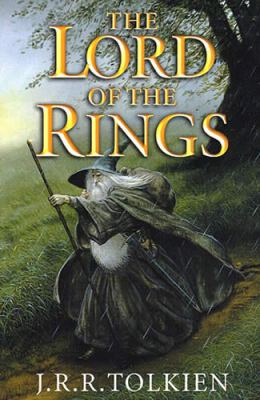
When a tweedy, Catholic, pipe-smoking Oxford professor named John Ronald Reuel Tolkien sat down to write a novel, who could have anticipated that his volcanic imagination would give rise to an entire continent, populated by elves, dwarves, orcs, wizards and ambulatory trees? Tolkien drew on his deep knowledge of ancient languages and mythology, and his agonizing memories of the Somme, to create a 20th-century fable of magic and heroism, misty mountains and mystical forests, goodness and temptation, wherein a tiny gnomelike hobbit, Frodo, goes on a quest to destroy the One Ring, a malevolent artifact that could be the downfall of all of Middle Earth. The founding text of modern fantasy literature, The Lord of the Rings also carries with it a profound, melancholy nostalgia for the innocent pre-industrial England that was lost forever in the muddy trenches of World War I.
Green remains a dim figure for many Americans. He stopped writing in 1952, at age 47, with just nine novels and a memoir behind him. In the last years of his life—he died in 1973—he became a kind of British Thomas Pynchon, agreeing to be photographed only from behind. But those who knew him often revered him. W. H. Auden called him the finest living English novelist. His real name was Henry Vincent Yorke. The son of a wealthy Birmingham industrialist, he was educated at Eton and Oxford but never completed his degree. He became managing director of the family factory, which made beer-bottling machines. But first he spent a year on the factory floor with the ordinary workers, and his fiction is forever marked by an understanding of the English at all levels of society, something rare in class-bound British literature. Loving is a classic upstairs-downstairs story, with the emphasis on downstairs. You see the life of a great Irish country house during World War II through the eyes of its mostly British servants, who make a world of their own during a period when their masters are away. Green’s generosity towards even the most scheming and rascally of them offers a lesson you never forget.
In light of the Material Girl performing at Super Bowl XLVI, TIME takes a look at her life and career, both of which have been lived firmly in the public eye.