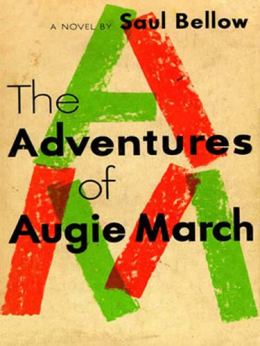
Augie comes on stage with one of literature’s most famous opening lines. “I am an American, Chicago born, and go at things as I have taught myself, free-style, and will make the record in my own way: first to knock, first admitted.” It’s the “Call me Ishmael” of mid-20th-century American fiction. (For the record, Bellow was born in Canada.) Or it would be if Ishmael had been more like Tom Jones with a philosophical disposition. With this teeming book Bellow returned a Dickensian richness to the American novel. As he makes his way to a full brimming consciousness of himself, Augie careens through numberless occupations and countless mentors and exemplars, all the while enchanting us with the slapdash American music of his voice.
More than just a classic political novel, Warren’s tale of power and corruption in the Depression-era South is a sustained meditation on the unforeseen consequences of every human act, the vexing connectedness of all people and the possibility—it’s not much of one—of goodness in a sinful world. Willie Stark, Warren’s lightly disguised version of Huey Long, the onetime Louisiana strongman/governor, begins as a genuine tribune of the people and ends as a murderous populist demagogue. Jack Burden is his press agent, who carries out the boss’s orders, first without objection, then in the face of his own increasingly troubled conscience. And the politics? For Warren, that’s simply the arena most likely to prove that man is a fallen creature. Which it does.
Sue me, but I like Betty Draper/Francis as a character. The problem is that Mad Men doesn’t. Betty’s not the worst character on the show, but she’s probably the worst-served.