

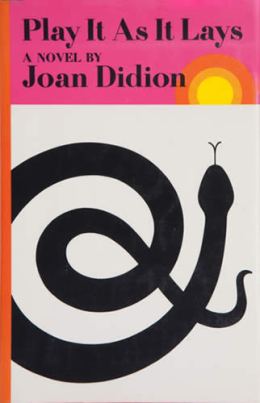
Didion’s mordant lucidity is like L.A. sunlight, a thing so bright sometimes it hurts. She’s a descendant of the old California, the great- great-granddaughter of pioneers. But she was also schooled at Berkeley and in the literary circles of Paris and New York, so she’s fully versed in the predicaments of a shaky modernity that she does not care for in the least. To drive home her belief that the world, or at least the part around L.A., is coming to a bad end, she gives us Maria Wyeth, a model turned actress turned hollowed-out woman who speaks to us from the mental institution where she has fetched up after a long slide into despair. Passing through a pointless career, a toxic marriage, an abortion, finally holding the hand of a close friend while he commits suicide; when she tells you, “I know what ‘nothing’ means,” you believe her.