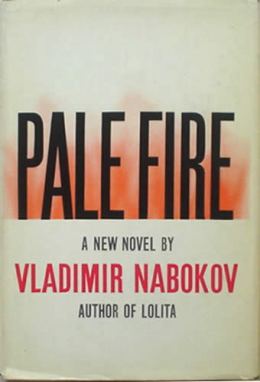
A bizarre, three-legged race of a novel, Pale Fire is composed of a long, narrative poem followed by a much longer set of footnotes written by an obsessive, increasingly deranged annotator. Charles Kinbote, a gay professor at a small New England college, may or may not be a noble-born expatriate from the exotic Eastern European principality of Zembla. He may or may not have stolen the manuscript he’s annotating, which he is convinced is really all about him. He is unquestionably unhealthily obsessed with John Shade, the placid, Robert Frost-like poet who composed the poem. Beyond that all bets are off, and the questions ramify without end. Pale Fire is the kind of novel you can happily get lost in: a house of mirrors with no exit, a labyrinth with no endpoint.
By the time the great Edwardian novelist, in this last and best of his novels published in his lifetime, addressed himself to the British presence in India, his moral sense was more fully equipped than ever. Mindful of the imponderables of human conduct, alert to all the reciprocal misjudgments and the wearying false appraisals we make as a matter of course, he looked at empire and saw its weak foundations. Adela Quested is a British visitor to the Raj who is anxious to know “the real India.” On a visit to the Malabar caves an assault of some kind does or does not happen to her, perhaps at the hands of Dr. Aziz, the solicitous Indian Muslim who has arranged the trip. Has she imagined things? Is he not what he seems? In his other great novel, Howard’s End, Forster directed us to “only connect.” What he demonstrates here, in a story of the greatest and saddest subtleties — and comic subtleties, too — is how nearly impossible that is to do.
In light of the Material Girl performing at Super Bowl XLVI, TIME takes a look at her life and career, both of which have been lived firmly in the public eye.