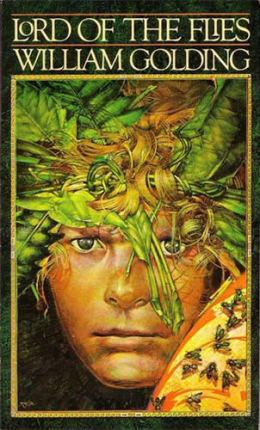
The premise: A planeload of young boys is marooned on a nameless tropical island and they are forced to fend for themselves. If this novel had been written in the 19th century it would have been about the cheery, whimsical never-neverland the boys created. But in Golding’s version, the veneer of childish purity wears away quickly in the absence of adults, and the boys become two warring tribes, one under the saintly Ralph and his asthmatic sidekick Piggy, one under the savage ex-choir-leader Jack. Golding tracks the fall of this new Eden with pitiless, meticulous care and total psychological clarity, and in the process he ruthlessly strips away the myths and cliches of childhood innocence forever.
When a tweedy, Catholic, pipe-smoking Oxford professor named John Ronald Reuel Tolkien sat down to write a novel, who could have anticipated that his volcanic imagination would give rise to an entire continent, populated by elves, dwarves, orcs, wizards and ambulatory trees? Tolkien drew on his deep knowledge of ancient languages and mythology, and his agonizing memories of the Somme, to create a 20th-century fable of magic and heroism, misty mountains and mystical forests, goodness and temptation, wherein a tiny gnomelike hobbit, Frodo, goes on a quest to destroy the One Ring, a malevolent artifact that could be the downfall of all of Middle Earth. The founding text of modern fantasy literature, The Lord of the Rings also carries with it a profound, melancholy nostalgia for the innocent pre-industrial England that was lost forever in the muddy trenches of World War I.