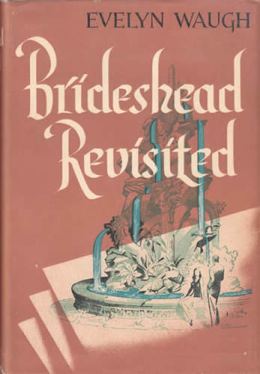
Once and only once in his career the bitter, urbane, howlingly funny satirist Evelyn Waugh screwed up all his nerve and his talent and produced a genuine literary masterpiece. Though it’s saddled with a faded doily of a title, Brideshead Revisited is actually a wildly entertaining, swooningly funny-sad story about an impressionable young man, Charles Ryder, who goes to Oxford in the 1930′s and falls in love with a family: the wealthy, eccentric, aristocratic Flytes, owners of a grand old country house called Brideshead. In the first half of the book the exquisite, hilariously fey Sebastian Flyte, who is Charles’s classmate, teaches the young man about beauty, booze and witty conversation. In the second half every one grows up and everything goes spectacularly to smash. Told in flashbacks from the dark days of WWII, Brideshead is aglimmer with the guttering-candle glow of an elegant age that was already passing away.
Whatever happened to Wilder? He was a lion in his day, prized — Pulitzer-prized, as this book was — a star of stage and page. Today, notwithstanding the occasional production of Our Town or The Skin of Our Teeth, he’s ever in danger of falling out of fashion. He seems too courtly, too composed. For proof of how powerful those qualities can be, there’s this book. In 1714, “the finest bridge in all Peru” collapses and five people plunge to their deaths. Brother Juniper, a Franciscan missionary, decides to track down their individual stories to prove that even what seem to be random misfortunes are consistent with God’s plan. That his discoveries turn out to be more complex will come as no surprise. What may surprise are the beguilements of Wilder’s teasing, ironic, beautifully written tale, unlike anything else in American fiction.
In light of the Material Girl performing at Super Bowl XLVI, TIME takes a look at her life and career, both of which have been lived firmly in the public eye.