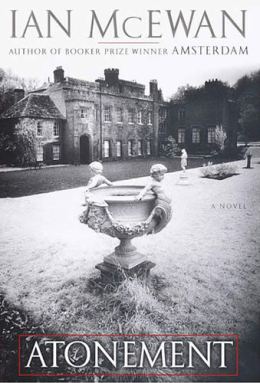
A magnificent deception. Briony Tallis, the intricate English girl at the center of Atonement, is a budding writer. At the age of 13 she believes that through her powers of invention and language, “an unruly world could be made just so.” In a complicated way, she turns out to be right, but only after she turns out to be catastrophically wrong. In the first half of the book, she passionately misunderstands a series of events she witnesses on a summer day in 1935, which leads her to formulate a lie that ruins the lives of her older sister Cecilia and Cecilia’s lover Robbie. So much for the virtues of the imagination. But McEwan is crafty. Even as he shows us the deadly force of storytelling, he demonstrates its beguilements on every page. Then he leads us to a surprise ending in which the power of fiction, which has been used to undo lives, is used again to make heartbroken amends.
Sethe is an escaped slave in post-Civil War Ohio. Her body is scarred from the atrocities of her white owners, but it’s her memories that really torture her: she killed her 2-year-old daughter, Beloved, so the child would never know the sufferings of a life of servitude. But in Morrison’s novels the present is never safe from the past, and Beloved returns as an angry, hungry ghost. Sethe must come to terms with her, exorcise her, if she ever wants to move forward and find peace. Rich with historical, political and above all personal resonances, written in prose that melts and runs with the heat of the emotion it carries, Beloved is a deeply American, urgently important novel that searches for that final balance between grief, anger and acceptance.
Sue me, but I like Betty Draper/Francis as a character. The problem is that Mad Men doesn’t. Betty’s not the worst character on the show, but she’s probably the worst-served.