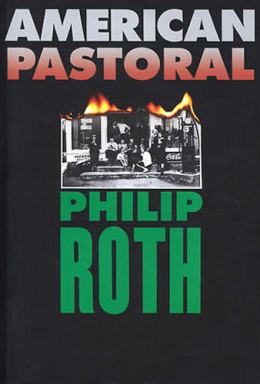
To decipher the late 1960′s through the story of Swede Levov, whose life is cast into the fires of those years, Roth calls again upon the saturnine side of his disposition. It answers to the purpose as never before. Good-looking, prosperous Swede, who has inherited his father’s glove factory in Newark, N.J., and married a former beauty queen, is not stupid, merely fulfilled. Is it this that gives him insufficient means to comprehend the Newark riots of 1967 or the transformation of his beloved daughter into a venomous teenage radical, a child capable of cold-blooded terrorism? Roth’s own means are more than sufficient. A writer who is unafraid to linger in the minds of furious men, he leads us fearlessly through this man’s grief, bewilderment and rage.
Clyde Griffiths is a young man with ambitions. He’s in love with a rich girl, but it’s a poor girl he has gotten pregnant, Roberta Alden, who works with him at his uncle’s factory. One day he takes Roberta canoeing on a lake with the intention of killing her. From there his fate is sealed. But by then Dreiser has made plain that Clyde’s fate was long before sealed by a brutal and cynical society. The usual criticism of Dreiser is that, line for line, he’s the weakest of the great American novelists. And it’s true that he takes a pipe fitter’s approach to writing, joining workmanlike sentences one to the other. But by the end he will have built them into a powerful network, and something vital will be flowing through them.
Sue me, but I like Betty Draper/Francis as a character. The problem is that Mad Men doesn’t. Betty’s not the worst character on the show, but she’s probably the worst-served.