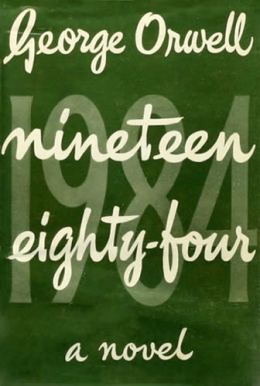
The time is 13 o’clock; the date doesn’t matter; the year goes without saying. Winston Smith, a bureaucrat at the Ministry of Truth, toils day and night in the service of Big Brother, the remote, faux-benign ruler of this eerily familiar dystopia. Orwell’s novel is a study of every possible way a nation can be beaten down by its government: spiritually, physically, intellectually, by the media, torture, surveillance, and censorship, to the point where the state can manipulate reality at will. When Smith is tempted by a beautiful resistance fighter into an act of rebellion, 1984 becomes something more: a strange, tragic, deeply sad love story. It is Orwell’s triumph, and the century’s misfortune, that 1984 is as prescient as it is pessimistic.
The book that launched a thousand trips. For his hyperkinetic, endearing, culture-changing novel, Kerouac admitted whole worlds through his windshield. An account of a few pinwheeling characters in perpetual cross-country motion, it has room to spare for rivers, landscapes, starry skies, Benzedrine addicts, endless marathons of driving, the hipster demiurge Dean Moriarty and lots of other fast-talking madmen. “Because the only people for me are the mad ones,” Kerouac’s narrator, Sal Paradise, tells us. “The ones who are mad to live, mad to talk, mad to be saved.” Capote’s famous putdown of the book got it exactly backwards. That’s not typing, Truman. That’s writing.
Sue me, but I like Betty Draper/Francis as a character. The problem is that Mad Men doesn’t. Betty’s not the worst character on the show, but she’s probably the worst-served.